Showing posts with label daily life. Show all posts

Saturday, July 29, 2023

Make America Godly Again

 It was back in June, and I was shopping for clothes to take on a retreat.  I suppose it was an excuse — do I really need more clothes? — in a nice women’s shop. I had picked out a couple of sale items, when I turned and saw her.  She was wearing a t-shirt that said, “Make America godly Again.”

And immediately I wondered, I wonder what godliness would look like to her?

I didn’t ask.  I wasn’t sure I wanted to get into a theological discussion right then, and, it was June, and out of the corner of my eye I also spied what I THINK was their tasteful and sort of understated Pride-themed shirt.  It was white but had all kinds of colors woven into it as well.   

The woman’s “godly” t-shirt:  gray.

Maybe this was a coincidence, but it did make me think.

I posted about the incident and my question on facebook.  Some people did ask me why I didn’t ask HER.  Maybe I should have.  But I thought possibly it would have been a longer conversation.

On facebook though, I did get a response that made me think.  One of my friends talked about godliness and how people just went to church more back in the 1940s and 1950s (and even 1960s).  The church where I grew up was full, and, I will admit, I sort of wish that the church was full like that again.

It got me nostalgic for awhile, thinking back on the crowded Sunday School Rooms, and youth group (although I didn’t really like youth group, but that’s another story).  I thought about every Sunday worship and what it sounded like when a lot of people are singing hymns they know and love, together.  Most of the stores weren’t open and there wasn’t much on TV.  If you asked people, almost everyone said they believed in God.

The Good Old Days.

But was that godliness?

I’m older (and still Christian, by the way), but I know some things about the “good old days” that I didn’t when I was growing up.  The good old days weren’t good for everyone.  I just didn’t know about it then.  I didn’t know about segregation.  My northern suburb didn’t really have any people of color.  I didn’t know about lynching.  I didn’t know that people thought it was somehow godly to bar the doors of their churches and not let people of color worship with them.  It was considered godly to have separate schools and separate water fountains.  


But everybody went to church.  And believed in God.

So “Make America Godly Again?”  How do we know we were godly before?  How are we even defining godliness?  What is our criteria for godliness anyway?

When I think back on my childhood, (and frankly, even parts of my adulthood), I think I defined godliness as what I wasn't supposed to do -- drink, smoke, swear, be too familiar with the opposite sex before marriage,  My grandparents also included dancing and playing cards (they believed it was a sin to use face cards and we only played Rook.)  So godliness was a sort of respectability, although that turned out in some cases to be outward respectability.  And perhaps, in some cases, that included going to church.  

I still remember my aunt telling me once, when I talked to her about the "good old days" in her hometown and home church, about men being active in church, that she replied, "And then they went home and beat their wives."

So, "make America godly again?"  I have mixed feelings.  I would want to know what the definition of godliness was.  I would want to know what the criteria was.  I would hope that rather than barring the doors and keeping people out, true godliness would include mercy and wide welcome.  It would include seeing the image of God in one another, and even the stranger.  You know, like Jesus, who hung around with sinners and accepted dinner invitations from them.

I think as well that I would be careful about wearing a "Make America Godly Again" t-shirt.   If I did, it wouldn’t be gray.  It would be all the colors.  Godliness would be vibrant, with open arms.  Godliness would rejoice with those who rejoice and weep with those who weep.  Godliness would laugh, and sing.  And be humble.  Godliness would have room for more people, not fewer, because it would be based on the huge surprise of grace.


Tuesday, July 18, 2023

What makes a church good?

 Early one steamy morning my husband and I were walking our dog around the common areas of our community.  It was early enough that the lawn workers were out, mowing and weeding and beautifying, and as we walked along the circle, one of them paused mowing to let us pass.  I thanked him, and asked him how he was.

“I want to quit!”  He said.  

“How long have you been doing this?” I replied.

“Three days.  But I know I don’t want to do this the rest of my life.  I think I might want to go to college.”

I asked him which college, and he quickly named a well-regarded college nearby.  I offered that one of the young people from my church would be attending that college this fall.

He asked if I attended the church down the street, and I said, No, and I named my church (Grace) and where it was located.

Then he asked, “Is it a good church?”

Before I could say anything, my husband responded, “SHE’S the pastor!”

The young man looked surprised.  “YOU’RE the pastor?”

Sometimes it is difficult to imagine that after all these years (women have been ordained for over 50 years in my denomination) people are still shocked that I exist.  And yet, it’s not his final comment that reverberates; it’s his question:  “Is it a good church?”

It made me wonder what a “good church” would look like to him.  Maybe that’s why I hesitated to say “yes."  I think that my church is good (after all, I’m the pastor), but in what way is it good?  Would he think so?  And even though I think we are “good” (whatever that means), I don’t think we are a perfect church.   There are times that I am amazed by our love and generosity — I still remember the Spirit I felt when our congregation blessed our two high school seniors and gave them quilts that our quilters group made.  On that day, I thought, “This is a great church!”

One of our newer members lives alone; when he had medical appointments, some of our other members gave him rides to and from the doctor’s office.  And when the son of a friend of the congregation needed to get married over a weekend leave, members of the congregation made sure he and his fiancĂ© were welcomed, and made the celebration happen.

When an older member of the congregation died suddenly, almost 30 members of the church attended her funeral, even though it was at another venue about forty miles away.

But, if I am honest, there are other moments too:  times when someone (even me) said the wrong thing at the wrong time.  There have been moments when the livestream failed, or the sermon fell short.  The music isn’t always perfect.

But, what makes a church good?  That’s what I am thinking about.  I don’t know what this young man thinks.  I don’t know if a good church for him is large, and has a band, or small, and has prayer groups.  I don’t know if a good church for him is sure about everything, or leaves room for doubt.  

For me, this is what makes a church good: a church that listens to the children and the shut ins.  A church that hears the voice of God, in scripture, but also in outcasts.  A church that practices forgiveness.  A church that knows Jesus, and wants to know him better.  A church that cares for one another, and for others.  This church doesn’t need to be large, but there is always room for more.

What makes a church good?

Friday, May 22, 2020

Singing, in and out of Church

My dad always sang in the shower.  He sang in the car, too.  And, he sang in church, standing right next to me.  He sang all of the hymns, and all of the liturgy, and even the bass part on the three-fold amen.  Sometimes, in the quiet of my heart, I can still hear him, singing in church.  Because he sang, I sang too.  I learned Beautiful Savior, and What a Friend in Jesus, and Children of the Heavenly Father, and Immortal, Invisible, God only Wise.

It wasn't just church, of course. My mom played a little bit of piano, just enough so that we could sing a few of the old standards.  And of course, there was always the shower, and the car.  There was always a lot of singing, and singing along.

So during this season that we have not been in the church building, it has been the singing together that I have missed.  I wanted to make sure that the services that we provided included some singing -- not just music, but singing, even if it was just one person, or two people.  Maybe nobody would sing along.  But maybe someone would.  Maybe even a few people would.  I hoped so.  I imagined just one person, maybe, sitting at their computer, singing along to a familiar song at worship.  I imagined that perhaps a family or two would not just stare at the screen, but sing along as we were singing a hymn, or a contemporary song.

We went to church every single Sunday when I was a little girl.  I mean it.  Neither rain nor sleet nor snow would ever keep us from missing Sunday morning worship (although I think that measles did, once).  We did not travel much, back when I was a little girl, so church was like clockwork; we never missed.  So I have a very vivid memory of the one time that my parents decided to sleep in, and not go to church one Sunday morning.  I have no idea what possessed them, but it did not catch on.  But what I remember is that my sister and I stood in the middle of the living room floor, holding my dad's old hymnbook, and we sang the liturgy.

I'm not sure why we did it.  Nobody told us we could; and nobody told us we couldn't.  But we decided we wanted to do something holy that Sunday morning, even though we weren't in the church building.

So we sang.

These days, I am heartbroken.  I have heard that during the current pandemic, it is not safe to sing in church.  It is not safe to sing together.  That's what they say.  So when we finally do gather, we won't be singing.  And it will feel strange.  Because church has been one of the few places left where we still sing together.

I can't help but think, though, that perhaps this is a time to find our voice, not just in our church buildings, but out of them.  In the middle of the living room, for starters.  To learn to sing, and to speak, even when we can only imagine the other people singing along.

I heard recently from a friend whose church worships on Zoom.  The choir director there tells everyone to mute themselves when they begin a hymn.  Then, he tells them, "you can sing as loud as you want to!"

I love this.  When I think of it, I think of my dad, singing in the shower, or in the car, or in his whole life.  And I think of my immigrant foremothers and fathers.  They didn't have many books, but they had their Bibles, and they had their hymnals.  They carried church with them.  They had home altars. They lit the candles, and they sang.

Every once in awhile, someone from my church will post a picture of their home worship space.  their candle, or their Bible, or whatever it is they need to set the space apart.  It gives me a little bit of hope.  Maybe the children are standing in the middle of the living room, singing.  Maybe they are having a conversation about God.  Maybe they are praying out loud, even when they are alone.

So, let us sing. Alone, for now
.  Loudly or softly.  Whether we sing in tune or not.  And let us sing of a love wider than we can imagine, stronger than death, greater than our national interests, bigger than the whole universe.

Friday, February 28, 2020

Oil and Ashes

On Sunday evening, I got a phone call from a member of our congregation.  She wanted me to know about another member of the church who was dying.  She wanted to make sure I knew, and that I would go out to see her as soon as possible.

A little later I got a text from someone else with the same message.  It was already late, so I resolved to go over early the next morning.

That Sunday morning we had been on the mountaintop with Jesus.  It was a brief, shining encounter; we raised up brightly colored Alleluias and shouted and then put them away for Lent.  That morning we remembered the words, "This is my beloved son, with whom I am well-pleased."

Then, on Monday morning, I drove over to the assisted living center where this 101 year old woman lived.   I considered that she had faithfully attended worship almost every single Sunday, but not the day before.  One of her daughters-in-law was at the door of her apartment when I arrived.  She was sleeping peacefully.  I prayed and sang and spoke in her ear; I sang Beautiful Savior and What a Friend we Have in Jesus.  I told her how important she was; how much the children loved her. Her daughter-in-law told her that her husband was waiting for her, that everyone would be all right.

Then I got a small container of oil out of my purse.  It was something I had just received; a hand-me-down from a retired pastor.  I hadn't used it before.  I unscrewed the lid; there was not much balm left, but there was enough to put on my finger, and on her forehead, and to say the words, "You are sealed by the Holy Spirit, and marked by the cross of Christ forever."

And I remember that after that, her daughter in law took the container from me for a moment and she smelled the fragrance of that small amount of balm.

It was two days before Ash Wednesday.

On Wednesday morning at 7:30 I was standing in the lobby of our congregation's pre-school.  Parents came in with babies and toddlers, and I was there to offer ashes and strange words to anyone who stopped.  "Remember that you are dust, and to dust you shall return."  And although not everyone stopped, some did, expressing thanks, some silently.  One man told me that he was raised Catholic, but hadn't been for awhile.  Several brought their children to be marked as well.

And even though I do this, I offer the words and the ashes, I have to wonder what it is that draws people to the ashes and the words, "Remember that you are dust"?  It seems like the last thing we would want to remember.

A little later, I held a chapel service for the children over in our sanctuary.  We heard the story of Shadrach, Mesach and Abednego in the fiery furnace, and how the fourth man was with them in the flames, so that they were not burned.  And afterwards, two of the teachers and several of the older children also wanted ashes on their foreheads, in the form of a cross.

"Remember that you are dust, and to dust you shall return."

After the chapel service, when I arrived at the church office, and I learned that my 101 year old member had died that morning.

"You are sealed by the Holy Spirit and marked by the cross of Christ forever."

Oil and ashes, we are marked.  We are born and we die.  We die, and we are born again.

At the end of the day I got a message from a young mother from my church.  She said they had really hoped to come to the noon service, but they didn't make it.

But before she went to bed, her daughter went to the fireplace, and found ashes and marked her parents with the ashes.  With the sign of the cross.

You are dust, you are marked with oil and ashes.  You are born and you die.  You die, and you are born again.

Monday, February 17, 2020

A Tale of Two Funerals

A week ago on Monday afternoon I was here for the memorial service of one of my parish members.  That's probably not an unusual thing for a pastor to say.  I've held a lot of funerals through the years.  But, until recently, i have not had many in this little congregation.

I remember meeting with the family the Thursday before.  She wanted to have two hours visitation starting at 12:00.  The service would be at 2:00 p.m.  They chose two hymns; I urged them to include one more.  They had two friends as eulogists as well.  The man's wife and children spoke so warmly of their husband and father, memories of family events and things that he had done in the communities where they lived, including (I remember) that he liked to read to the children at Head Start.  And I remember that she was concerned that our church would be large enough.  They had heard from many people who planned to attend.  We had extra chairs ready for the narthex and the balcony, just in case we would need them.

As it turned out, we did need them.  This little church of ours was packed that Monday afternoon.  I have never really seen anything like it before.  I have been to a few other large funerals, but it felt like people just kept coming, squeezing into every nook and cranny, singing "Beautiful Savior" at the top of our lungs.  I did not see this, but i was told that there was a line of cars stretching down the highway waiting to get into our small parking lot.

It is not very often that you get a glimpse of the impact that one life can have.  One ordinary life.  This man, though beloved, was not in any way famous.  He did not have an especially large family. He was active in his church and he was active in his community.  There was something humbling about trying to squeeze all of those people into our little building that day.    It felt like God was shouting at us to have faith -- that though we are small, God is mighty.  Just look around.  Look at all of the people.  Look at how God works in the world.

That is how I felt that day.

Inevitably, though, I thought back.  It was early December, the beginning of Advent.  I was preparing for a funeral that day too.  We had gotten word that an elderly member of our congregation had died on Thanksgiving Day.  Her daughter called and asked if we could have a small memorial service in our church.   Of course we could.  This woman had been a faithful member of our congregation for many years.  I remembered where she always sat, every single week.  I remember that she wore a sweater, even when it was hot.  I remember how her son started bringing her to church, when she became ill.  During the last several months, people asked after her when she was not able to come to church.

On that day in early December, there were not many people in the church.  A few family members, a few faithful members of my congregation, who had looked out for her.  My heart warmed to see them.  One woman who came expressed dismay at the small group of people gathered.  She was as shocked to see this small group of worshipers as we were shocked to see the great crowds last week.

I don't remember much about the funeral, except that her granddaughter gave a lovely solo.  I remembered a particular sermon I had given, when I asked members of the congregation to share their favorite Bible verses, and this quiet unassuming woman had raised her voice and quoted Isaiah 59:1, "The arm of the Lord is not too short to save, nor is his ear too deaf to hear."  Her family shared stories of her love and faith and strength.

And it was no less true that day in December -- though we are small, God is mighty.  Look around.

This is how God works in the world.

Friday, January 17, 2020

Just Mercy

Last Friday my husband indulged me by going with me to the movie "Just Mercy", which had just opened up in our community.  It's not that he didn't want to see the movie, but that I had read Bryan Stevenson's book in 2015, shortly after moving to this community from Minnesota.  I remembered the strong emotions the book elicited, and its stories that put a human face on many death-row prisoners -- some of them guilty, some of them innocent.  I remembered its main story well, about Walter McMillan, framed for a murder he did not commit, and the irony that his story took place in Monroeville, where Harper Lee wrote "To Kill a Mockingbird."

Very near the beginning of the movie is this small vignette, which I remembered from the introduction to his book.  Bryan Stevenson is still a law student, and he is going to visit an inmate on death row for the first time.  He doesn't know the young man, and he doesn't have good news.  He is anxious about the contact on many levels.  He wonders if this inmate will be bitter and abusive to him.  But when he goes to the prison, that's not what he finds.  He finds a young man who is much like him, who had a similar church background, sang the same songs, lived in similar kinds of experiences.  He tells the young man that he will not be executed in the coming year, and he reacts as if it's the best news he ever heard.  Now, he says, he can invite his wife and children to visit him, because there's no danger that he will be inviting them on the day of his execution.

They ended up talking well over the one hour limit (which raised the ire of the prison guard).  As the angry guard pushed the prisoner back out of the room to his cell amid Stevenson's protests, the young man suddenly burst into song, "Higher Ground."  He sang with conviction in a deep baritone voice,

Lord lift me up and let me stand
By faith in Heaven's tableland
A higher plane, that I have found
Lord, plant my feet on Higher Ground.

Stevenson says that in that moment he experienced grace.  He did not expect to receive hope from this young man on death row.  He wondered how many people we meet, in how many circumstances, we do not really see.

The words Jesus speaks in this week's gospel are his first recorded words in John's gospel.  They are all provocative in their own way.  "What are you looking for?"  "Come and see."

But today I am thinking that it is the third time that is the most powerful.  Andrew brings his brother Simon to meet Jesus.  Jesus looks at Simon and sees him, and says.  'You are Simon, son of John."  But that's not all he says.  He continues, "From now on you will be called Cephas" (which means Peter).  Jesus sees Simon, and he sees a Rock.

Bryan Stevenson has spent his life working for justice for those many of us do not see.  He sees people battered by life experience, struggling against disability, some wrongfully imprisoned, some trying to rise above the worst they ever did.  But before he could help them, he had to see them.  It's not as easy to do as it is to talk about it.  But it is a moment of grace.  Both to see -- and to be seen.

How many people do we meet, in how many circumstances, that we do not really see?

Wednesday, October 23, 2019

Seen and Unseen

Early this week a woman from my congregation stopped by and said she needed to talk to me.  She told me about a couple in her neighborhood that she visits.  They are somewhat shut in, so she has been checking on them and visiting with them to make sure they are okay.  Lately, the husband has been diagnosed with a terminal illness.  She asked him if he wanted a pastor to come and visit him.  As it turns out, he had an affiliation with our denomination earlier in his life, and when she asked him, he got tears in his eyes.  She wondered if I would be open to paying them a visit.

Not too longer before that, a man from my congregation mentioned that his family had taken a single mom and her son under their wing.  They have gotten to know each other.  The mom has to leave early in the morning for work, before her son has to get up to catch the bus for school.  So sometimes this man will go and knock on their door in the morning to make sure her son is up and ready for school.

Recently our congregation completed a modest capital drive.  For part of our capital drive, we finished a modest face-lift of our sanctuary.  Now that we're done, we're asking, what's the next step? We are talking about the necessity to reach out in our community in new ways -- to know our neighbors, and think of ways that we can meet the felt needs in our community.  We are not a large congregation, but we know that we need to be a part of our neighborhood, know our neighbors, and care about them in real and concrete ways.

In the middle of thinking about what our "church" could do, I thought about these two small encounters that I knew about -- the woman who visits her shut-in neighbors, the family who has befriended a teen-age boy and his mom.  How many other unseen encounters are there in my congregation, just like these?

It's easy to focus on the things we can see.  In fact, it pretty much all we can do.  I can see the people who come to make supper for the homeless families who stay at our church a few times a year.  I can tell you all of the names of those who help serve communion or help with the children's church or make breakfast one Sunday a month.  I am grateful for the quilters who gather on Fridays, the altar guild who prepare the altar on Saturdays, the Bible study leaders who meet in homes.

But it suddenly occurred to me that so much may be going on that I cannot see, and that because I don't see it, I don't honor it, and make sure people know how important it is, and that this is a part of their calling to love their neighbor.

I keep reading things about how the church is too inwardly-focussed, too much worrying about maintaining their property and membership and comfort, and not enough focussed on their neighbors.    But maybe part of the problem is that this is what we can see -- but there is so much going on that we can't see and don't notice.

The same person who tells me she doesn't know what it means to be outwardly focussed -- just got home from going to the funeral of a neighbor's son.  She didn't know that what she was doing was ministry.

I noticed recently that a woman had not been to church for awhile.  In fact, it occurred to me that I had only seen her in church when she had a role in worship.  I will admit that my first thoughts were that she only thought it was important to come when she had to do something, but instead I decided to email her and ask how she was doing.

I found out that she had been through so many stresses in the past few months, illnesses and deaths in her family, people she was supporting with presence and prayer.  I had no idea.  So much of her life was unseen to me.

This is the church.  Seen and unseen.  But so much unseen.  Except by God.  The One who has planted us deep deep down in the world, from which we do spring up.

Tuesday, August 27, 2019

Hospitality to Strangers

My memories of Hebrews 13:2 go back to my childhood, and a book that I received from my godparents.  It was called, "Angel Unaware", by Dale Evans Rogers (remember Roy Rogers?) and was about their young daughter who died while she was yet a  child.  I remember the positive message that caring for a sick child turned out to be a blessing and a transformation rather than a hardship.

I suppose that this verse is one of the best known passages of scripture.  It's right up there with, "Jesus Christ, the same yesterday, today, and forever."  Or "Now faith is the assurance of things hoped for, the conviction of things not seen".  And who wouldn't want to entertain an angel (even though you didn't know it until afterwards)?

But since I am now a student of Biblical languages (especially Greek), and since I have been thinking more deeply (especially lately) about the word "stranger", I can't stop thinking about this passage of scripture.

I start with that really disarmingly short first verse.  "Let mutual love continue."  You know what "mutual love" is in Greek?  Philadelphia.  The city of brotherly love.  So love your brothers and sisters.  That's the first thing.  And that makes sense, right?  Not controversial at all.  Not that I'm saying that it's always EASY, but it makes sense to love "one another."

But the next part -- about showing hospitality to strangers -- well, that's another thing, if you really think about it.  Without any disrespect to Dale Evans Rogers, the word "hospitality to strangers" in Greek is really one word "philoxenia" -- which means "love of the stranger."  To be hospitable is to love the stranger.   And the word entertain?  is the word "xenos" in Greek, which means both to be a host AND to be strange.  To be a good host is -- in a way -- to be strange.  Or maybe -- just maybe -- the best host knows what it means to be a stranger.

This blows my mind.  This blows my mind as an American and a Christian and a pastor.  Partly because when I hear the word "stranger" -- this is a word that I don't associate with angels so much as I do with fear.  Especially these days, but not only these days.  These days we are afraid of the strangers at the border, people whose lives and poverty we cannot seem to imagine.  But most of us -- were at one time strangers and sojourners in this land as well.  We were immigrants from somewhere, poor or hopeful or fleeing oppression.  Most of our families have a story about when they were strangers, when they didn't know the language, when they prayed that someone would be kind, speak slowly, help them count their change in the grocery store, help them find their way in a strange city or a strange neighborhood.

But perhaps the best host knows what it means to be a stranger, and perhaps this applies to the church as well.  We have become too at home here in this world.  We have forgotten what it means to be a stranger, and this affects our ability to truly share the good news.

I remember that long ago, I lived as a missionary in Japan.  I was there to share the gospel, to invite people to the great feast, which is Jesus and his love.  But most of the time, I was a stranger.  I couldn't read the labels on food in the grocery store.  I didn't know how to cook most of the food I found there, at least at first.  I only knew a few other people, who came to Japan with me.  I understood the rhythm of the liturgy, but not the words.   And it seemed to me (although I didn't realize this for a long time) that this was a part of the point.  To be a stranger.  Not to know everything.  Just to know Christ, and him crucified.

We used to get off the trains in our neighborhood, and walk through the streets, smelling the good smells coming from people's houses.  We would joke about knocking on stranger's doors and invite ourselves in for dinner, but we had learned enough Japanese culture to understand that we should never do that.  But we knew that we were vulnerable, and needed help to navigate the world.

Perhaps the best host knows what it means to be a stranger.  I can't help thinking about Jesus, who was guest at so many parties, and how many people thought they knew him, but they didn't.  He was the best host who, on the night he was betrayed, took bread, and shared it with his disciples.

The truth is, the world is a strange place, and the Kingdom of God is stranger still.  Love your enemies.  Forgive people, and keep forgiving them.  Be generous.  Give everything away, and you will be rich.  You are deeply flawed, and you are deeply loved.  You are not what you do.  You are not what you buy.   Love the stranger.

There is no "strategy" to mission.  It's just love.  Love one another.  Love the stranger.  Love yourself, in all of your strangeness.  Love Jesus.  After all, the best host knows what it means to be a stranger.

Tuesday, August 13, 2019

Bilingual

The other day a woman I am acquainted with startled me by saying that she has experienced people telling her to "go back where she came from."  I knew that she was born in the United States, so I could not imagine the scenario where someone would say something like that to her.

"When does this happen?" I asked.

"When I am talking to my 92 year old father," she said.

So people assume that, because she is speaking in another language, a language that they perhaps do not understand, that she is somehow less-than.  That she does not belong.

Things like this happen.  A woman from my congregation took her daughter to get her driver's license.  She has an hispanic last name, and the woman at the office asked if she or her daughter had a green card.  She is from CHICAGO.  But for some reason or another, because of the arrangement of certain letters in her name, it is assumed that she is less-than.  That she does not belong.

Like my new acquaintance, the one who speaks to her father in Spanish, and to me in English.  The fact is (and perhaps this is what really makes people uncomfortable) she is not less-than.  She is more-than.  She is bilingual.

I remember going to Disneyland when I was sixteen.  It was a long time ago, and we went on a tour with a number of other first-time visitors to Disneyland.  The tour guide was telling us all about the history of Disneyland, and then, she turned to some other guests sitting next to us, and she started talking to them in French.  I was fascinated.  I couldn't imagine being able to just switch languages like that.  I couldn't imagine being bilingual.

This is the immigrant experience.  It was the experience of my grandparents, on both sides.  My grandma Judy came from Sweden as a young woman, worked as a domestic in Connecticut, and kept her foot in both countries for awhile, traveling back and forth from Sweden to American until she met my grandfather.  She tried to teach us Swedish words.  I only remember a few of them now.

What is it that makes us want to believe that someone else does not belong?  That they are somehow "less-than"?  To know more than one language, more than one culture, more than one reality, is rich and necessary in our world.

I think that to be a follower of Jesus is, in a way, to be an immigrant.  When we take the values of the Kingdom of God seriously, we will realize that there is another language in the world.  It is the language of the Kingdom of God, and sometimes it doesn't make sense.  The kingdom of God speaks of valuing those who seem to be less-than:  the widow, and the orphan and the stranger.  The kingdom of God tells us to pay attention to the small and the vulnerable rather than the powerful and the successful.  The kingdom of God speaks of love that asks nothing in return.

And there are people who might hear that kind of language and say, "Go back to where you came from."

The woman I know who was told, "Go back to where you came from" -- she said that her family is from Patagonia.  She showed me pictures.  It's a beautiful place, where she's from. But she is called to be here now.  She promised to teach me a little Spanish.

The Kingdom of God is a beautiful place.  And more and more I hope to learn the language of that place too.   Every once in awhile I hear a new phrase:  "a bruised reed he will not break and a dimly burning wick he will not quench" -- so different than the language of the other world I live in, where the poor are crushed and turned away.

Someday this world will fall away, and all that will be left is the language of the love of God, and we will see the beauty in those we thought were less-than, and we will be astonished.  In the meantime, we are called to teach each other a few words of the New Language, to be bilingual.


Monday, June 17, 2019

Hand Motions

Yesterday was Holy Trinity Sunday at my congregation, the Sunday we make special recognition of the name of the one whom we invoke every single week:  Father, Son, and Holy Spirit.

So, among the songs we sang about the Trinity, was this simple one:

Father, I adore You
Lay my life before You
How I love you.

I sing this song at the pre-school connected with the church sometimes.  It is simple enough to learn, even though the concept is too hard for pre-school children to grasp.  We learn the simple words, and we also learn some hand motions.

Come to think of it, every single song I sing with pre-school children has hand motions.  

Usually on Sunday morning we do not use hand motions.  We sing complicated songs with a lot of words, some of them hard:  words like "Trinity" or "Immortal" or "cherubim".  So on Sunday morning we were singing a song much simpler than our usual fare.

I decided to teach the congregation the hand motions too.

Why do I do hand motions with the children at the pre-school?  I can't say that I have thought about it very deeply.  It's just something you do.  Children need to learn not just with their eyes, and not just with their voices, but also with their hands and their feet.  Learning is active.  Learning is a whole-body experience.

I like to think that worship is a whole-body experience too, but when I think about it, I realize that a large part of it is learning to sit still and pay attention.  Sitting still does not seem very whole-body, although it is an important thing to learn to do.  It is also (and even more so) very important to learn to pay attention -- not just for an hour or two on Sunday -- but in every part of our life.

I learned well how to sit still in church.  And there were times when this skill was very helpful.  I was a good student.  I knew how to listen to the teacher.  There are times when sitting still is very important.

But I confess that sometimes I think I learned that lesson too well.  I was so good at sitting still, that I was afraid to get up.  If I sit still, I thought, I can't get into trouble.   Not getting into trouble became the point.

But sometimes faith calls us to get into trouble.  Sometimes faith even calls us to make a ruckus.  How do we learn that?  How do we learn that there is a time to sit still and listen, and there is a time to stand up and do something?  There is a time to walk right over to the wounded man by the side of the road in Jericho and help him.  There is a time to stand up and say something is wrong.  There is a time to use your hands and your feet and your whole body to worship God.  There is a time to stretch out your hand to help, to comfort, to heal, even to raise a fist.  There is a time to do the hand motions, to use your whole body to worship God, to follow Jesus.

Hand motions.

Jesus, we adore you.  Lay our lives before you.

Our whole lives:  hands, feet, voices, shoulders and knees, eyes and ears.  Our beating hearts.


Monday, May 20, 2019

Behaving in Church

One day during the coffee hour after church I mentioned to someone that I enjoyed the fact that there were more children in worship than there used to be.  "I think it's important for them to be there,"  I said, by way of making conversation.

My conversation partner agreed.  "Yes," she said, "it's important for children to learn how to behave in church."

"Behaving in church."  Is that what we are doing?  Maybe it is.  We sit and we stand at the right time.  We are silent when we are supposed to be silent.  We speak when we are supposed to speak.  We sing (or we don't sing if we don't know the song.)  We listen during the sermon, or our minds wander.  We shake the hand of the pastor as we leave, and say, "nice sermon, Pastor."  That is how we behave in church.

Or, if we are children, we sit still and try to fidget as little as possible.  We color in the pew, or we go elsewhere to have an age-appropriate experience.  Sometimes our parents help us follow along, a little.  But what is most important is to behave, not make a ruckus, not run up and down the aisles, not shout or say something inappropriate.  You know, behave in church.

There's 'behaving' and then there's worshipping.  We come to church not simply to behave but to worship.  To worship means to listen and to speak, to sit still and to stand up, to sing and to pray.  To worship is to participate.  I want children, in all of their fidgety, wondering uniqueness, to participate in worship.

When I was a little girl, I sat next to my dad most Sundays.  I looked up the hymns in my hymnal, and I sang along with my dad when he sang the hymns in his baritone voice.  He participated, and I wanted to participate too.  He said the prayers and I said the prayers.  I learned to worship by worshipping with him.  And I loved the liturgy because he loved the liturgy.  I still do.  I love knowing the parts by heart, when to sit and to stand, and to participate.

But that is just a sliver of what worship can be.  In our church now, we do something that we would never have done in my church growing up.  it would not have been considered proper.  Sometimes we invite the children up during the last song, to play musical instruments.  We let them help with the benediction by putting their hands up in blessing.  We let them know that worship is an active verb.

One Sunday, something out of the ordinary happened.  Just before the end of the service, a woman in the congregation asked for prayer.  She said she had gotten a text from her son, and her grandson was in the hospital.

So we did something that might not have been considered proper when I was a little girl.  We invited her to come forward, and we prayed for her grandson.  And I asked if anyone in the congregation would come up and surround her while we prayed, and help us pray for her grandson.

A few adults came to the front of the church.

 All of the children came up to pray.

Because, they had learned how to behave in church.  

Wednesday, April 24, 2019

The Child Who Held My Hand

It was Holy Week last week.  Our new pre-school director had a great idea, something we hadn't done in exactly this way before.  She wanted to have a short chapel session every day, and every day tell a little more of the story of Jesus.

So on Monday we had palms and marched around the chapel and told about how Jesus rode into Jerusalem on a donkey and how people spread their cloaks on the ground and shouted 'Hosanna!" And on Tuesday we told about how Jesus washed his disciples feet and how he shared supper with them.  On Wednesday we had flowers and Jesus prayed in the garden, and we prayed too, and the soldiers came.  And on Thursday -- on Thursday there was a cross and a tomb, and a centurion told us how he felt about Jesus and the cross.

At the end of the chapel on Thursday, I told all of the children to gather with their teachers so that they could go back to their classes.  And as always, I went to the door of the chapel and greeted all of them as they lined up with all of their classmates and prepared to go back to their classrooms.  And somewhere, in the middle, one little boy grabbed my hand and just held on.

I could have made him let go, but somehow I didn't.

Because he held my hand, I ended up walking with him out of the chapel and onto the sidewalk.

Because he held my hand, I kept walking with him.

A couple of times he rubbed the back of my hand on his cheek.  And then he just kept holding on.  So I kept walking with him.  We went through the front doors of the school, and he kept leading me until I ended up in his room.

I keep thinking about the journey through Holy Week, and the little boy who held my hand.

Usually I just say goodbye to the students at the door of the chapel.  I don't go any further with them.

But on Thursday, I walked the whole way, just because he held my hand.

This is how it is with us, and with the story of Jesus as well.  We can leave it there at the door, and wave goodbye, and go about our week.

Or we can walk with the story all week.  Jesus can become real to us, and his story our story, and we can walk and walk until we find ourselves in a place we never thought we would be.


Monday, April 8, 2019

Serving Communion in the Dark

I was glad on Sunday morning when I realized that the rain had not started yet.

Sometime on Saturday afternoon, I started getting news reports about severe weather.  It was first scheduled to arrive in the middle of the night, then sometime early Sunday morning.  But when I got up on Sunday, the rain had not arrived yet.

I was pleasantly surprised.  It was going to be an important Sunday in church, not just the 5th Sunday in Lent.  We had important things to do.  Afterwards, we had scheduled a meeting of parents and youth planning activities for the coming year.  We have never had enough children and youth to plan activities before, and I did not want our planning meeting to be rained on.

I also had scheduled a home communion visit in the afternoon with a homebound couple from the church.

We made it through worship without any rain.  I won't lie:  it was a gloomy, threatening morning, but it didn't rain and we even made it through our youth planning meeting.  When I went back home it had just started to sprinkle.

I called the shut-ins and said I would be over after lunch, but that I would be keeping an eye on the weather.  They said they understood and would see me later.

It wasn't long after we finished eating that the wind came up, and the thunder started.  On my phone I saw that there was a tornado warning in the area.  Then, just a few minutes later, we heard a sound I had never heard before.  I thought perhaps sirens were going off, but it wasn't exactly like that, either.

It was over soon after that.

I called my shut ins.  I couldn't get through.  My husband said, you will just have to go over.  So I did.

When I got there I discovered that their power was out.  They were sitting in the dark, eating hamburgers that one of their daughters had brought them.  Even the stoplights were out on the neighboring streets.

It was still daylight outside, but inside the house it was more like twilight.  We visited for awhile about natural disasters:  tornadoes and earthquakes and hurricanes and blizzards -- all of the normal things.  Their daughter fretted about what would happen if the power did not come on, and said she would be back to check on them later, to make sure they got to the bedroom all right.   They kept re-assuring her that they would be all right.

Finally, I opened up my communion kit.  It was getting darker, and I wasn't sure how well I would be able to read the prayer book.  But just as I was pouring the wine, the husband got out the biggest flashlight I have ever seen and flashed it right at me.  I felt a little like I was in the spotlight.

I tried to hold the book under the light and read the words while he held the light in his hand.  I opened the Bible and read the gospel reading:  about Mary and the anointing oil she poured over Jesus' feet -- and we wondered together about that scandalous generosity.  I felt the light on the book as I tried to read the pages, and the light warm on my face, making me blink.  The light exposed some things and hid other things.

And when I got to the words of institution and I held up the wafer and the small cup to the light, somehow I felt like a player on a stage -- the darkness all around -- this moment in time, this act, illuminated.

The body of Christ given for you.  The blood of Christ shed for you.  In the darkness.

I watch the news and despair sometimes.  Of disasters natural and unnatural, preaching a gospel of chaos.  These are dark times, when it seems like we cannot see each other's faces, and know that we are made in the image of God.

And then the spotlight comes on in the darkness, as the oil is poured out on Jesus' feet.  The spotlight hits my face, and I realize that God is calling me to lift the cup, to break the bread, to say the words by which God reconciles the world.

The body of Christ given for you.  The blood of Christ shed for you -- and for all people.  In the darkness.

Friday, April 5, 2019

Mindfulness

Last Sunday afternoon I was in a meeting after church with a few other church leaders.  Our facilitator went around the room and asked us to introduce ourselves.  One of the questions she asked us to answer was "Tell us about something interesting that happened during the last week."

This should not be a hard question.  Right?

But when my turn came at the table, I drew a blank.  What was something interesting that happened during the past week?  I couldn't think of anything.

I wanted to excuse myself and go into my office and stare at my calendar for a few minutes.  Because interesting things happen to me all the time.  I have conversations and go to the hospital, and kneel down to talk to small children.  I was sure if she could give me a minute I could think of something.

I felt like somehow, I had not been present during the past week.  Had I let a whole week go by without paying attention?  I had to do better.

I remembered going to the bookstore a couple of days before.  This is a big outing for us.  It's a sort of a mental health break during the week.  I usually spend a little time checking out the current magazines.  I notice that there are a lot of magazines these days with names like "Breathe" and "The Mindfulness Journal" and "10 Minutes to Mindful Living."

I am not sure what Mindfulness is, except that it is supposed to be good for you.  I suspect that it is the exact opposite of letting a whole week go by without noticing when something interesting is happening to you.  I suspect that it has something to do with paying attention.  Maybe if you pay attention, there are more interesting things going on than we think.

There are the mockingbirds building their nests, there are people holding hands and praying in hospital rooms, there are tiny flowers pushing their way up in front of the sanctuary.  There are small children who wave at me when they are leaving pre-school in the afternoon.  There are people who will dare to tell you a story from their life, if you are wise enough to listen.  There are poets whispering words into your ears, and the azaleas are preaching.

I am not going to say that suddenly this week everything was better, that I started paying attention suddenly.  Life is still a blur sometimes.  But I am hoping to snatch a moment, here and there, like the little boy who was so excited that he got to go to chapel on Wednesday.  Like mist on the windshield, or the touch of anointing oil, when someone asks for prayer.

Monday, March 11, 2019

Lent is Not Self-Help

I'm spectacularly bad at giving things up for Lent.

Truthfully, I'm pretty bad at any sort of regular Lenten discipline at all, except going to Wednesday evening services, which is required because I am the pastor.  I keep thinking that it would be good if we got one of those cardboard banks for Lent and practiced giving a special offering for a particular cause, but I haven't gotten around to doing it.  One of these years...

But I digress.  Mostly, this is about my inability to give something up for Lent.  Partly this is a failure of imagination:  as Lent draws hear,  I think:  what would be a good thing for me to give up this year?  And most of the time, I can't come up with anything that I would consider interesting.  There was one year that I gave up buying books for Lent, which turned out to be excruciating, which means it was a good idea.  Right?

I also remember one Wednesday morning early when I was taking the garbage out to the curb.  It was a snowy, icy, cold morning in Minnesota, and suddenly I realized that it was Ash Wednesday (which I did actually know) and that I did not know what I was going to give up for Lent.  And I thought, what if I get rid of one thing a day for forty days?  That was a really good idea, theologically, I had to admit.  But logistically, it was not as easy as it sounded.  Bags of things accumulated before I got them to the thrift store.

Most of the time though, I don't manage giving something up for Lent.  It was not a part of my practice growing up.  I don't automatically think of it.  I don't think it's a bad idea, though.  I like the idea of finding some special way to mark the forty days before Easter.

I think that one of my problems is that when I think about what I should give up, it's usually something bad for me.  Like sugary treats, or potato chips, or soda (although I don't drink soda, so there's that.)  Then I start thinking of Lent as some sort of self-improvement project, a way to lose weight, or change a bad habit, at least temporarily.

Don't get me wrong:  I think changing bad habits is a good idea.  I think becoming healthier is a great idea.

I just don't think that's what Lent is for.

I think that Lent is more about failure than success.  Maybe the point about giving things up (if you do) is not to be so good at it.  Maybe the point is to come face to face with the grace of God, the grace that only failures need.  All of you who can make it on your own need not apply.

Lent is about getting ready for Easter, getting ready for not only Jesus' resurrection, but our own.  I am not sure what is the best way to get ready for that, except living and paying attention, and being honest.

Friday, November 30, 2018

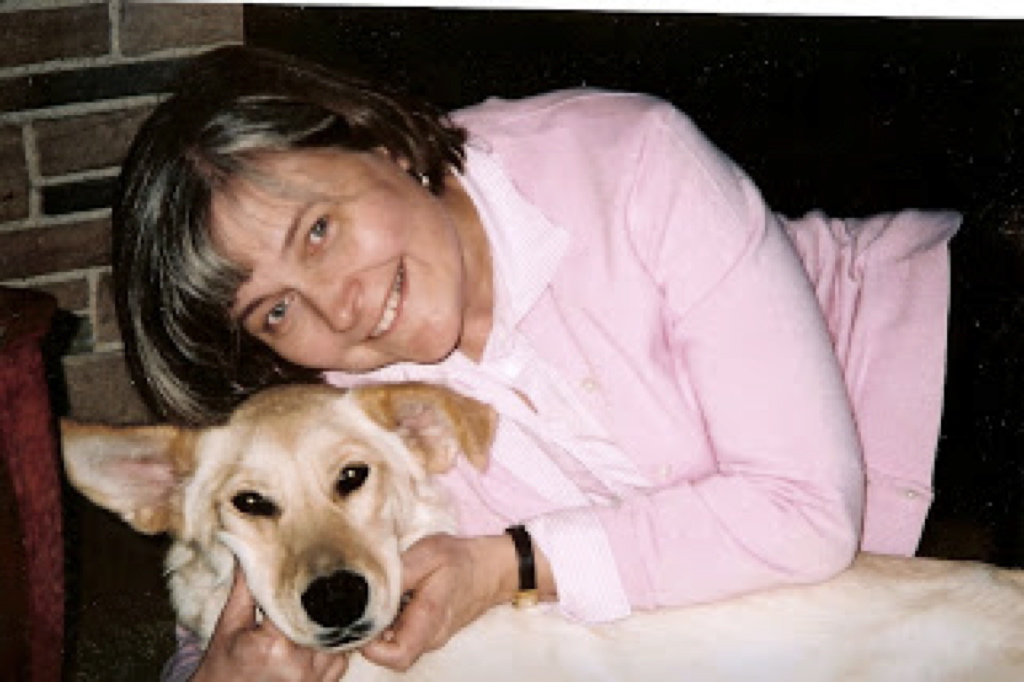
A Letter To Scout, the Dog

We had to put down our 13 1/2 year old golden retriever mix, Scout, yesterday.  I wanted to tell her what she meant to me.  So I wrote this:

Dear Scout,

I met you because of my work.  You were just a tiny puppy.  I was a pastor, visiting a shut in.  You were at Redeemer Residence Nursing Home in South Minneapolis, because a nurse had brought your mom (a golden retriever) and all eight of you puppies to work with her.  You were all in a crate together, and you attracted a LOT of attention.

The shut in and I visited that day, and each of us held a puppy in our hands.  I don't know if you were one of those puppies.  But later on, someone called and said that one of the puppies was available.  Would I like one?  You were 'almost' free.  You had no pedigree.  Golden, Husky, and "something else", was what they said.

Well, I would like one.  I wanted one desperately.  But I had never had a dog before.  I knew you would be a lot of work.  Previously I had been a cat person.  My family had a dog once, so I knew just a little bit about dogs.  Like, dogs are a lot of work.  And, you have to house train them.

I knew you would be a lot of work, but I wanted you.  I wanted something to love.  Truthfully, this was partly because I always wanted children, and I knew I would not have children of my own.  I do have two stepsons that I love with all my heart (and Scout, I know that you did too) but I wanted a baby.  A dog baby.  And yes, I knew you were a puppy and not a human, but I knew also that you would need a lot of care, and I wanted to give you a lot of care.

So we brought you home.  You were just short of 7 weeks old.  We had studied and asked questions but truthfully, we had no idea.  I apologize for that.  You never really liked the crate.  For some dogs it is a comfort, but it never was for you.

I took you home and the first couple of weeks were very hard, taking you out in the middle of the night (both of us surprised when a raccoon jumped out of the garbage can).  There was sleep deprivation and running back and forth from church, and then taking time off so I could stay home to train you.  And then you started getting sick in the middle of the night, and we couldn't find the right food for you, and you started getting possessive of strange things -- growling over a paper towel (for example) or a sock you found on the ground, and scaring us.  I realized that I was in over my head in dog training, and I took you to the Animal Humane Society for testing and advice.  You had been sick the night before and were skinny and I brought a can of bland food for the test.  They did some tests and said you were a "confident puppy".  But then they put a little food in the food bowl and had you start eating and when they put the plastic hand in to take away the food you went ballistic!  They told me you were "aggressive" and that you would need special training but that there were no guarantees that the training would work.  You were about 10 weeks old then.  I took you home and cried all the way.

But we took you to a behavioral veterinarian and we took you to a special trainer who specialized in aggression.  I took you to the dog park almost every day when you were a puppy, to try to deal with some of that excess energy.  We took you to classes in dog obedience.  You never got very good at coming when called, but you really got good at "drop it" and "leave it."  You sat like a pro, but "stay" was hard.  You were not a perfect dog, but you were a good dog.  I know this because of you.

Because of you, I took walks.  I have never been good at regular exercise.  I'm one of those people who likes reading and writing and thinking way too much.  I tried to walk, because I like walking, but until you came along I was never very consistent.  But I took you for walks every single day.  Even when it was dark and cold.  Sometimes, of course, they were shorter walks, but I took walks, and sometimes long walks in the summer.  Because of you I was not afraid to take walks in the dark, because you were with me.  Because of you I took walks because you needed the exercise too.

Because of you, I learned a new language:  dog.  When we went to the behavioral veterinarian, she said, "Scout doesn't know English.  Think of her as if she was a German exchange student."  So I studied, and tried to learn dog.  I learned how to read your bows and your growls and the way you turned your head to the side.  I learned to notice when your tail was up or your tail was down.  and I learned to stand straight and speak low when I wanted you to take me seriously.  I read the book Culture Clash and The Other End of the Leash, and learned to respect your species, and not try to make you into a human.  I still remember the day I learned what it meant when you dropped one of your toys by the kitchen table while we were eating:  you wanted to trade!  (sorry:  you did not get table scraps.)

Because of you, I learned to be less materialistic.  Because sometimes you destroyed things that I loved.  Like (for example) books.  Or a nice pair of shoes.  But I knew you didn't do it on purpose, like some people would.  You just didn't understand the value that humans put on "things".  So I learned to let go of things -- some things -- that I really loved -- because they are just things -- they are not creatures with hearts that beat, and are alive.  (I also learned -- at least most of the time -- to put things where you could not get them).

Because of you, I learned what the word "good" really means.  Because you were a good girl.  You were always a good girl.  Even when you chewed up books, and even when you unwrapped packages, and even when you ate the raisin cookies (and I had to take you to the vet).  Despite all of those things, you were always a good girl.  Even when you growled and snapped as a puppy, and made us afraid, it was because you were trying to tell us something.   You bit me once, and then I knew I had to get really serious about understanding you, and making you understand me, too.  And finally we learned, and you lived for 13 1/2 years, and you were a good girl.   Because you know what, "Good girl, Scout" really means?

It means, "I love you."  No matter what.


Tuesday, August 21, 2018

Ten Blessings

Over the past few years, I have tried to take time to name ten blessings of the day.  I think that the idea is that I am supposed to do this every single day.  Sometimes I am pretty consistent; other times I have forgotten, often for days at a time.  However, I think that it's a simple, and potentially powerful thing:  just to take time to name ten blessings ever day.

I learned this practice from a member of my last parish.  Harriet was a retired airline executive who had traveled all over the world.  She was also the daughter of a minister who had grown up in a small town in Minnesota.  When I met her, she lived within a few blocks of the church, in a small house decorated with Norwegian Rosemaling.

Harriet once gave a moving Adult Forum on her travels, and how she found a place to worship no matter where she was in the world.  Her Forum was called "The communion of Saints."

I say that I learned this practice from Harriet, but it was not until near the end of her life that I learned it.  Fiercely independent, she found herself in a nursing home.  When I was planning to visit her with communion, her executor told me that Harriet had this faith practice.  Every day she named ten blessings.

"Make sure you remind her to do this when you go to visit her," she said.

So I did.  I got out my communion, and I went to visit Harriet at the nursing home where she didn't want to be.  We talked, we shared communion, and I asked her what her ten blessings would be that day.

When you are living in a nursing home, it's not so easy to find the blessings.  She had to think about it for a bit, and be creative, and resort to the simplest things, like being alive.  I remember that one of her blessings that day was a box of chocolate.

Ten blessings.  Every day.  I have never read about it in any book.  It's so simple.  Anyone can do it.  If you can count to ten, you can name ten blessings.

The Jesuits have a practice called "seeing God in all things."  Somehow I think this practice relates to that one.  There are times and places where it is easy to see God.  But in all things? How do you do that?  Start by naming ten blessings, wherever you find them.

A woman who lived close to my church lost her home to a fire.  We took up a collection to help her.  When I called her on the phone (I didn't know her personally), she said that the fire was, "the worst blessing."  I was taken aback.  She said the blessing was in the outpouring of care from her neighbors.  She saw God in all things, although I am not sure how she managed it.

When I think of Harriet's life, I think of the ways she was blessed.  She was a pastor's daughter from a small town, and she ended up traveling around the world.  But she never married, and I suspect sometimes she was lonely.  She had blessings and she had burdens.

And every day she named ten blessings.  Maybe some days they were so small they didn't seem like blessings.  Maybe other days she could have named twenty.

But at her funeral I claimed the promise of the saints:  the promise that they have received more blessings than they can count, more than the stars they cannot see.  We can't hold that promise in our hand, but we can name ten blessings.

Every single day.

Wednesday, February 14, 2018

Marked

I was going to wear my good alb for Ash Wednesday worship, except that it's not my good alb any more.

I bought this one a few years ago, just before I traveled to South Dakota for one of my congregations' 100th Anniversary.  It seemed like a good occasion to splurge, to show my congregation that I had come up in the world, even just a little.  I had made do for many years with the least expensive robe I could find.  It had velcro at the top, and fastened with velcro too.  The new one had buttons!  and two pockets.  I had saved up a little money, so I bought it.

A couple of weeks ago I brought my robe to a wedding where I would be officiating.  It was an outdoor wedding, and I was undecided about whether I would wear it or not.  I decided I would not.  But when I got home, it looked wrinkled, and I thought I would put it in the wash.  And in the dryer.

When I came out, I discovered that I had left a ballpoint pen in the pocket.

This was a terrible mistake.

There were great big blotches of ink all over the robe.  I mean ALL OVER.  I sprayed and put the robe in the wash again.  I soaked it for a week, and sprayed it again.  And washed it again.  Some of the spots have become a little lighter.

But not much.

I briefly considered wearing the alb anyway, on Ash Wednesday.  If you see it, you might see why.  It is a great (or terrible, depending on your point of view) visual aid of the presence and persistence of sin in our lives.  We are all marked.  And we can't get the stains out, no matter how hard we try.

I briefly considered wearing the alb anyway, but I just couldn't.  I decided that it was just too embarrassing.  I just couldn't stand up there with all those ink spots, and imagining everyone looking at me, thinking, "What HAPPENED?" or "How dumb could she BE?"

There are times when I wonder, too, about wearing the ashes, on Ash Wednesday.  I wonder about it because I always read the gospel of Matthew, which tells me not to practice my piety in front of others, so that they will say, "Good job!  You're so religious!"  And I have thought of the ashes as an act of piety.

But today I think that the ashes are more like that stained alb that I won't wear, because it's too embarrassing.  To wear the ashes is to admit my fault, my sin, my failure.  To wear the ashes is to confess my impiety.  I am in the company of those who have failed.  I am in the company of those who have done stupendously dumb things, like wash clothes with a pen in the pocket.  I am in the company of those who have done mean things, and ignorant things, who have majored in minors, and not paid attention to the most important things.

So, I will not wear the robe tonight.  I'll wear the older one.  That one has a tear in the pocket, and some other flaws you might notice if you look closely.

Most of the time we don't want people to look too closely.  But on Ash Wednesday, some of us dare to stand together, marked, and tell each other the truth about our sad and beautiful lives.  There is power in that.  God can change us then.  Into what, I only have a vague idea, except that he promised that we would be transformed from one degree of glory into another.


Tuesday, January 30, 2018

Talking Points

I watch the news on TV sometimes, and listen to the political pundits, which, I know, is not really the same as being informed.  Sometimes I think it would be better for my health not to listen at all.  It is not that I prefer to be ignorant.  But what I realize, after listening for awhile, is that I actually learn very little.  What I hear is "Talking Points."

Talking points have become very predictable.  I know almost exactly what everyone is going to say.  It is as if someone gave the commentator a piece of paper, and told them what to say.   And I am not sure what I dislike most about the talking points.  I'll admit, sometimes it is just the fact that I disagree.  I think they are not taking something into consideration.  Sometimes it is the utter partisan predictability.  But sometimes it is the fact that they don't really feel real.  They don't acknowledge how messy life is, how complicated real solutions to our political issues really are.

They are talking points, not a real conversation.

So I am thinking about talking points, and wondering if perhaps we don't have talking points in the church sometimes too.  I was thinking about this on Sunday, when I preached about Jesus casting out a demon.  It's a really rich piece of scripture, and there are a lot of theological points to be made, the authority Jesus has, the power of evil, how Jesus won't let the evil spirit speak.  And I love all these points, and I'm really good at talking about them.  I learned a lot in seminary, and I have been in the church for a long time.  And I have been praying and talking to Jesus for a long time too.

But while writing down and thinking about all of the relevant points, sometimes other thoughts creep in, wreaking some havoc on the talking points I am so good at.  I think, Jesus, I have known you for long time, and I believe that you can cast out demons, and that you have more power than evil.  But I have to say that sometimes, terrorists blow up more people in Kabul, a young woman in despair completes suicide, a baby is stillborn, a drunk driver kills a family of four -- and it's hard to talk about Jesus casting out the evil, because there is so much evil still here, and I don't know what to say about it.

The talking points are fine, but they aren't enough.  They don't acknowledge how complicated life is, how messy faith is, how you can have trust in God and be floundering at the same time, how you can be trusting and rebelling, a sinner and a really good person, and how God is sometimes really hard to believe in, if you live in the world.

I remember a confirmation class a long time ago.  A junior high student was having a hard time with a particular aspect of faith that evening.  "You can't tell me what to believe!" he said.

My colleague sort of chuckled and said, "It's my job to tell you what to believe."

What he meant, of course, was it was his job to tell us what our faith's answers are to the great questions of life, what kind of God we have, what we believe about sin and evil, that God is the Trinity and Jesus is completely God and human, what it means when we pour the water over someone's head, where to find hope.

Those are the talking points.  But underneath the talking points, there is something else.  There is testifying to God's voice and God's silence in our life, why we believe when it doesn't make sense, what we do when everything falls apart.  And sometimes it does.

Saturday, November 25, 2017

What the World Needs Now

There's a moment from yesterday that I keep coming back to.  I'm not sure exactly why.

We were going on a short break after Thanksgiving.  Most of our vacation this year was taken up with moving out of our home in Minnesota.  The first time I went back, we made sure to see a few people but by the beginning of July it was clear that we would not get things done unless we put blinders on and worked non-stop.

So yesterday, we decided to take a one-night overnight, a real although short get-away out of town.  Friends from our congregation agreed to take care of our dog, Scout, for one night while we were gone.

And this moment -- it's not from the time away -- not exactly -- but we were on the way to the church to drop Scout off with our friends, who would meet us there.

When we got to the church, the door to the sanctuary was open, and they were both inside, getting some things ready for Sunday.  Scout saw them right away.  I let go of her leash and she ran down the middle aisle, where the husband greeted, and petted and patted and scratched her ears.

There was my twelve-year-old dog, who stumbles sometimes now on walks, running like a puppy.

I keep coming back to this moment.

And what I see is Joy.

My dog isn't perfect, as everyone who knows her will attest.  She has taken to destroying books lately, something that breaks our hearts, a little (or a lot, depending on the book).  The latest book of mine to be marred is one that my father gave me while I was living in Japan.  Usually I just throw the book away but with this one, I have kept it (so far) even though I'm not sure it's salvageable.

Lately when we come home and open the door, we wonder what we will find.  Sometimes everything is fine.  Sometimes there is a book with its cover ripped off and teeth marks and the spine destroyed.

Truthfully I can't hate her.  I know that what is happening has as much to do as our own early deficiencies in training as it does with her quirks in personality.  It's complicated.

But here's what is not complicated:  watching my old dog run down the center aisle of the sanctuary.

Joy.

It doesn't fix anything, but it's necessary, you know?  It's necessary.  In the midst of hard work, and fear, and changing what you can change, and figuring out what you can't -- there's Joy.

There is a lot that is not joy in the world, but it's there if you look for it, it's there:  a child opening a small gift and waving it in the air.  There's the joy of hearing an old song after a long time, or the joy of seeing someone you love, who loves you, despite everything.  There's a lightness in joy, a feeling that perhaps you could leap up, even fly.

I remember from last year now -- a Sunday when a little girl came into church while I was standing and giving the announcements.  She ran up to me and hugged my legs.  And I don't know what she was feeling, but I felt Joy.

There is serious work to be done in the world.

And then there's joy.