Showing posts with label children. Show all posts

Monday, June 17, 2019

Hand Motions

Yesterday was Holy Trinity Sunday at my congregation, the Sunday we make special recognition of the name of the one whom we invoke every single week:  Father, Son, and Holy Spirit.

So, among the songs we sang about the Trinity, was this simple one:

Father, I adore You
Lay my life before You
How I love you.

I sing this song at the pre-school connected with the church sometimes.  It is simple enough to learn, even though the concept is too hard for pre-school children to grasp.  We learn the simple words, and we also learn some hand motions.

Come to think of it, every single song I sing with pre-school children has hand motions.  

Usually on Sunday morning we do not use hand motions.  We sing complicated songs with a lot of words, some of them hard:  words like "Trinity" or "Immortal" or "cherubim".  So on Sunday morning we were singing a song much simpler than our usual fare.

I decided to teach the congregation the hand motions too.

Why do I do hand motions with the children at the pre-school?  I can't say that I have thought about it very deeply.  It's just something you do.  Children need to learn not just with their eyes, and not just with their voices, but also with their hands and their feet.  Learning is active.  Learning is a whole-body experience.

I like to think that worship is a whole-body experience too, but when I think about it, I realize that a large part of it is learning to sit still and pay attention.  Sitting still does not seem very whole-body, although it is an important thing to learn to do.  It is also (and even more so) very important to learn to pay attention -- not just for an hour or two on Sunday -- but in every part of our life.

I learned well how to sit still in church.  And there were times when this skill was very helpful.  I was a good student.  I knew how to listen to the teacher.  There are times when sitting still is very important.

But I confess that sometimes I think I learned that lesson too well.  I was so good at sitting still, that I was afraid to get up.  If I sit still, I thought, I can't get into trouble.   Not getting into trouble became the point.

But sometimes faith calls us to get into trouble.  Sometimes faith even calls us to make a ruckus.  How do we learn that?  How do we learn that there is a time to sit still and listen, and there is a time to stand up and do something?  There is a time to walk right over to the wounded man by the side of the road in Jericho and help him.  There is a time to stand up and say something is wrong.  There is a time to use your hands and your feet and your whole body to worship God.  There is a time to stretch out your hand to help, to comfort, to heal, even to raise a fist.  There is a time to do the hand motions, to use your whole body to worship God, to follow Jesus.

Hand motions.

Jesus, we adore you.  Lay our lives before you.

Our whole lives:  hands, feet, voices, shoulders and knees, eyes and ears.  Our beating hearts.


Monday, May 20, 2019

Behaving in Church

One day during the coffee hour after church I mentioned to someone that I enjoyed the fact that there were more children in worship than there used to be.  "I think it's important for them to be there,"  I said, by way of making conversation.

My conversation partner agreed.  "Yes," she said, "it's important for children to learn how to behave in church."

"Behaving in church."  Is that what we are doing?  Maybe it is.  We sit and we stand at the right time.  We are silent when we are supposed to be silent.  We speak when we are supposed to speak.  We sing (or we don't sing if we don't know the song.)  We listen during the sermon, or our minds wander.  We shake the hand of the pastor as we leave, and say, "nice sermon, Pastor."  That is how we behave in church.

Or, if we are children, we sit still and try to fidget as little as possible.  We color in the pew, or we go elsewhere to have an age-appropriate experience.  Sometimes our parents help us follow along, a little.  But what is most important is to behave, not make a ruckus, not run up and down the aisles, not shout or say something inappropriate.  You know, behave in church.

There's 'behaving' and then there's worshipping.  We come to church not simply to behave but to worship.  To worship means to listen and to speak, to sit still and to stand up, to sing and to pray.  To worship is to participate.  I want children, in all of their fidgety, wondering uniqueness, to participate in worship.

When I was a little girl, I sat next to my dad most Sundays.  I looked up the hymns in my hymnal, and I sang along with my dad when he sang the hymns in his baritone voice.  He participated, and I wanted to participate too.  He said the prayers and I said the prayers.  I learned to worship by worshipping with him.  And I loved the liturgy because he loved the liturgy.  I still do.  I love knowing the parts by heart, when to sit and to stand, and to participate.

But that is just a sliver of what worship can be.  In our church now, we do something that we would never have done in my church growing up.  it would not have been considered proper.  Sometimes we invite the children up during the last song, to play musical instruments.  We let them help with the benediction by putting their hands up in blessing.  We let them know that worship is an active verb.

One Sunday, something out of the ordinary happened.  Just before the end of the service, a woman in the congregation asked for prayer.  She said she had gotten a text from her son, and her grandson was in the hospital.

So we did something that might not have been considered proper when I was a little girl.  We invited her to come forward, and we prayed for her grandson.  And I asked if anyone in the congregation would come up and surround her while we prayed, and help us pray for her grandson.

A few adults came to the front of the church.

 All of the children came up to pray.

Because, they had learned how to behave in church.  

Monday, August 27, 2018

The Holy Spirit on Sunday Morning

I'll be honest:  I was sort of worried about worship this Sunday.  I have been dealing with some neck and back pain of mysterious origin for the last month or so.  There are times when it doesn't bother me much, but there are times when I feel like the pain is draining all of the energy from me.  I put on a lidocaine patch and took pain medication and prayed for help from the Holy Spirit.

I put on the green stole that a member of my congregation made for me.  I have been wearing it for several weeks, but until this week, I had forgotten to mention anything to the members of the church. Today I boasted in the gift.

During the first song, some of the children came forward and played rhythm instruments, while the congregation sang "Lord, Reign In Me."  After that, a little girl stood in the center aisle and gave the Call to Worship while her grandmother recorded the moment.

For the children's message, I asked the children if they ever had to learn to do something that was hard.  Most of them didn't think that anything was hard for them (well, one little girl learned the meaning of a word that I couldn't even pronounce.)  I asked her what the word meant.  I'm not sure, but I think she said it meant 'thinking about thinking.'  Anyway, they were all scandalized that some of the disciples GAVE UP on following Jesus, because his teaching was too difficult.

"You should never give up," they said.

Then my sermon, and my aching back.  Somehow I thought there should be one more paragraph, but somehow the paragraph did not appear.

Then there was singing, and piano and the drum, and the xylorimba, and then we shared Holy Communion.

And then it happened.

Just as I was getting ready for the benediction, a woman from the congregation raised her hand, and said, "I need to say something. I have a prayer request."  She told us that she had just received a text message from one of her children, and that one of her grandchildren was being taken to the hospital, and that they were afraid.  And they would like us to pray.

So we did.  Before the benediction, we prayed together.  I invited people to come forward and surround her, and a few people came forward to lay hands on her.

And then I noticed something else:  so many of the children were coming forward too.  They came up to be a part of the prayer.  They came up to be ministers of the gospel.

It was a holy moment, and I was in awe.  Why did I worry about worship?  The Holy Spirit helps us in our weakness.  With sighs too deep for words.  With the hands and feet and voices of children.  We are the body of Christ.  We are children of God.  We pray for one another.

Still I wonder:  why did the children come?  What made them able to hear the call?  Was it because it was a child who needed prayer?  Was it because they have been encouraged to participate in other ways?  Was it the Holy Spirit, and they could hear better than we do?  As one person said to me later, "We are raising them better than ourselves."

All I know is this:  the children came.  The Holy Spirit showed up.  This is church.

Sunday, July 15, 2018

Children in the Bible Sermon Series: "The Little girl Who Got Up"

Mark 5:21-43


            There’s a little Lutheran church in Cusco, Peru which is called “Talitha Cum.”  
            I thought it was an unusual name for a church --  in fact, I’ve never heard of a church with this name before, in the United States or anywhere else.  
            Why did they decide to call themselves “Talitha Cum”?  What were they thinking about?  What was their story?  
            These are the words – in Aramaic – that Jesus spoke to Jairus’ daughter when he raised her from the dead. 
             “Little Girl, Get up!” – And she got up.  And she was twelve years old.  

            What do we know about her, this little girl  in the Bible? 
            Not much, actually. Just a little.  We know her father’s name, but not hers  Her father was important; he appealed to Jesus to heal his daughter.  
            And Jesus was on his way to do just that when he was interrupted by another person – a woman – who needed healing
            Afterwards, everyone thought it was too late.  
            Jesus’ delay had cost this little girl her life.   When Jesus said, “she’s just sleeping”, they laughed at him.  
            But he went in and took the little girl by the hand, and said “Little Girl, get up!” – And she got up. She got up.

             So we don’t know much about the little girl.  Except that she was 12 years old, except that her father was important; except that she got up when Jesus said the word.  
            So what can we learn from her?  Can we learn anything about ourselves, about Jesus, from this little girl?

            Lately I’m thinking about children – a lot.  
            Maybe it’s the story about the boys in Thailand trapped in a cave with their coach.
            And waiting to be rescued.  And how they were rescued – and how that took the efforts of so many other people – to be rescued.  
            Or maybe it’s because of the children who were separated from their parents – and now being reunited
            In both cases -- they couldn’t help themselves, they had to rely on other people.  
            The children in the cave had to wait for help – they couldn’t rescue themselves.  The children on the border need help to find their parents or guardians again.  
            And the little girl needed Jesus – to take her hand and say the words – “Talitha com!”  “Little Girl, get up.”  She couldn’t raise herself.  She couldn’t rescue herself.   

            And you know – in so many ways – that is often the position we find ourselves in, before God. 
            We like to think that we can control everything – or most everything – or perhaps the most important things – but many times the most important things are beyond our control.  
            The most important things –  are in God’s hands.  Salvation – is in God’s hands.   
            And Jesus comes into our lives, and takes us by the hand and says the words that are life for us. “Talitha cum!”  Get up – and live.  

            The other thing we can learn from the little girl – and the two stories here – is that there is always enough – mercy and healing – to go around.  
            At the beginning, Jairus is desperate for Jesus to come right away.             And when he stops – to show mercy and healing to another – nameless – woman – it seems like his compassion is going to be at the expense of the little girl.  
            If he is going to be compassionate to this nameless woman, who had been suffering for twelve years – then the little girl will die.
             It seems like the lesson here is one familiar to all of us – there is not enough to go around – not enough resources, not enough mercy, not enough love – if you reach out to one person, you will have to leave out someone else.  

            Is that what we think? 
            Is compassion a sort-of zero-sum game?  
            I remember reading a story about a man who was stopped at the mall by a kindly woman who offered to pray for him and his children.
            He gladly agreed and asked if he could pray for her and her children as well.
            Then he asked if they could pray for the children at the border.
            She recoiled.  “But – their parents brought them here!”
            She could not afford to be compassionate.  – even in prayer.  

            Perhaps that’s just how Jairus felt.  If Jesus healed the poor woman, his daughter would be left behind.  It would be too late.  

            But that’s not what happened.  It wasn’t too late.  
            Jesus could heal the woman and he could heal the little girl too.     There was more than enough to go around, for those of us who need life and healing and mercy.

            “Talitha Cum.”  
            These are Jesus’ words of resurrection to a little girl.  
            And it’s also the name of a little Lutheran church in Cusco Peru.     And I discovered that the pastor who founded the congregation a few years ago – it began with a Bible study, and this was one of the gospel stories that they studied together.  
            When they decided they wanted to be a congregation, there were just a few people – and they were all – women and girls.  
            So they thought of the story they had studied about how Jesus had taken a little girl by the hand and raised her to life.  
            And they thought – that is who we are, too.  The women and girls Jesus has raised to life.

            And they got up.  

            What do we know about this little girl?  What can we learn from her?
            That by the mercy and love of Jesus, she got up.  
            And so can we.  So do we.   
            There is enough mercy – there is enough healing – to go around.  AMEN

*photo is from Peru, but is not from Talitha Cum, in Cusco.

Thursday, June 7, 2018

Sunday Sermon: Isaac the Questioner

Isaiah 22:1-19

            Children ask questions, that’s the truth  They ask innocent questions, they ask annoying questions, they ask the same question over and over again.  They even ask theological questions. 
            I remember getting a phone call one day from a young mother in our congregation.  She was looking for advice:  theological advice.  
            Her three year old was asking questions.  Well, one specific question, actually, and she didn’t know how to answer:  “Where Is God?”  What do you say to a three-year-old? She asked, when they ask this question.  
            What’s the best answer? She wanted to know.  
            Now I knew this woman pretty well, and knew she knew the answer to that question – for herself. 
            She was a woman of deep faith – faith which had already been tested.
            But she took  her daughter’s question seriously, and she wanted the right question – for her child

            What do you say to a three year old?  Or to a five year old or a twelve year old, for that matter?

            I am reminded of this question when I think about the story of Isaac today – because the story itself raises a lot of questions that demand answers.  
            For example:  What kind of God asks a father to sacrifice his son?
            Why would God do such a thing, ask such a thing? 
             We think religions that demand child sacrifice barbaric. And here is God, testing Abraham. 
             You can say, after the fact, that God did not end up requiring it, but while it is happening, it’s still pretty horrific to think about.  
            What  is God thinking?  
            And even though these questions seem important to us, they are apparently not important to Abraham. 
            He’s not asking any questions.  He’s just obeying.  At least this time.

            But there is someone asking a question.  Isaac, the child.  
            And his question is central to the story, but perhaps not so important to us, who ask adult questions, and seek adult answers.  
            This is the question of a child.  
            And like the mom who came to me for help, Abraham the parent wants to give him the best answer he can.  “Here is the fire and the wood, but where is the lamb for a burnt offering?”  Isaac asks. 
             Abraham listens to his son’s question.  He takes it seriously.  “God himself will provide the lamb,” he replies.

            There are a couple of pieces of this story that might seem like details, but I think are important. 
            The first is this: that three times Abraham hears a call. The first and the third time it is God calling.  
            Abraham answers God: “Here I am!”  
            The second time, the middle time, it is his son, Isaac, calling.  Abraham answers his son the same way he answers God, with the words “Here I am!”  
            He really listens to the voice of his son, and he takes Isaac’s words, and his question, seriously. 

            The second piece of the story is the element of trust:  Abraham trusts God, and Isaac trusts his father.  
            Why do I believe this? I believe that Isaac question is a sign that he trusts his father – he trusts him enough to ask a question. 
             His question is innocent:  the idea that he himself might be the sacrifice does not seem to occur to him. 
            And Abraham trusts God – I believe ultimately, and even while he is getting ready to sacrifice his son, he really hopes that there is a way out, that God will not require this. 
             When he tells his servant they are going ahead, he says, “the boy and I will worship, and then WE will come back to you.”  
            His words to his son also indicate this trust, “God himself will provide the lamb….”

            Children ask questions, that’s the truth.  
            They ask innocent questions, they ask annoying questions, they ask the same question over and over again. 
            They ask questions until we stop listening, because we can’t take it any more.  
            Children ask questions, and those questions are more important than we often think.  
            For one thing, before you can find the right answer, you have to ask the right question. 
             For another thing, a good question is a sign of trust, not doubt. Children ask us questions because they trust us.  
            Children trust us. And when I think of the world as it is today, I think that we are not always worthy of that trust. 

            This week I saw a snippet of one of the presidential press conferences.  
            Sarah Sanders was answering questions, and she saw a young reporter – and when I say young, I mean he was a child – and she smiled and said she would take his question. 
             I think as a mom herself she felt a warmth and thought he would not ask a hard question.  
            But the young reporter told her about the fear he and some of his classmates have when they go to school, and asked what the president and what the government was going to do to help them feel safe. 
             And when Ms. Sanders responded, I could tell that she had really listened to him, because for a few moments she teared up, and she had a hard time responding.  
            It felt like a genuine moment, so rare in our hyper-partisan time.  It felt like a moment of real listening.

            Children ask questions, that’s the truth.  (
            They ask innocent questions, they ask annoying questions, they ask hard questions.  
            It was perhaps the hardest question Abraham ever heard, “Father, here is the fire and the wood, but where is the lamb for the burnt offering?”

             And when Abraham answered with the words, “God himself will provide the lamb” he opened up a way not only for himself, not only for Isaac, but for all of us.   
            He spoke out of his deepest trust, his deepest hope, that God would provide a way through a hopeless situation.  
             
            And he was right. There was the ram in the thicket. There all along.   
            There was the offering. God will provide.   In our deepest questions.  In our deepest need.  
            Not an answer, but a lamb.   
            The lamb of God. Jesus.  
            Not just for Abraham. Not just for Isaac.  For us.
            When we are cut to the quick, when we are sinking in despair, when we are asking “why?”, when we are dying to live.  
            When we have tears in our eyes because we don’t know the answers to our children’s questions.
            When our tears are because we know the answer – and we fear it.
            When we know our failure.
            When we know our grief, too deep to bear.
            There is the lamb of God. There is the lamb of God.    When we are broken.  When we have failed.   When we have failed to protect our children.  

            There is the lamb of God, who takes away the sin of the world.  There is the lamb of God, walking with us, taking seriously all of our questions, loving us, healing us, drawing us again to him.  
            
            Children ask questions, that’s the truth.   Holy questions.  And so do we – all of us children of God.  May we listen, and may those questions draw us closer to the lamb of God who provides a way for us.
            AMEN 


Tuesday, May 8, 2018

Children in Worship

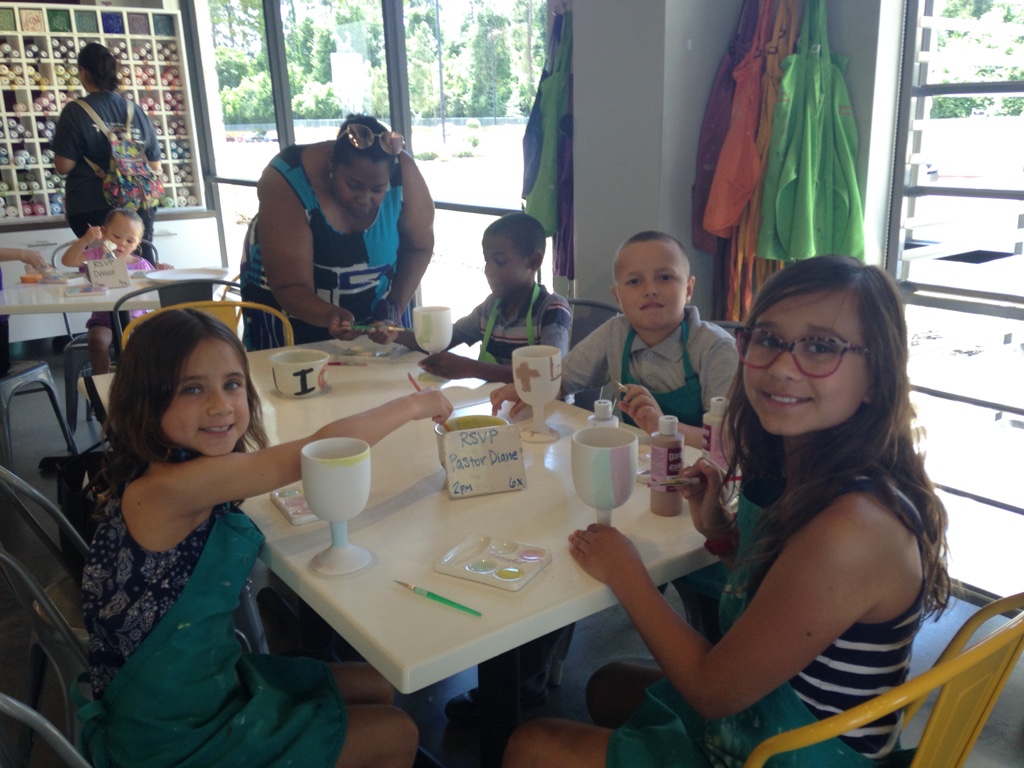
One of my best memories from early in my ministry is of the Sunday when two little girls decided they wanted to sit in the front row.  Without their parents.

They weren't sisters, they were friends.  Both sets of parents were in the building, sitting discreetly just a few rows behind them.  The opening hymn was from a supplemental hymnal.  If I recall correctly, it was a rousing contemporary song called "We Are the Church."

We all stood up, including these two young girls, and we all opened our supplemental hymnal.  And they held their hymnals high, singing at the top of their lungs:  "I am the church, you are the church, we are the church together".

Yes, we were.

Now granted, this was sort of a special scenario.  This was not "Beautiful Savior" or "A Mighty Fortress is our God" or "Now Thank We All our God."  This was sort of a child-friendly hymn, something we included once in awhile if it fit the theme of the day.  And this was one of those congregations where the children were in worship (all of it, including the sermon) every single week.  This has become rare, for a lot of reasons:  families are busier, and a lot of churches are holding education hour and worship at the same time.  Even more, I hear that there are some churches that hold separate worship services for children and adults.  You walk in, and the children go one direction, for "children's church", and the adults go another direction, for adult worship and teaching.

On one level, I suppose this makes sense. Children and adults need different things.  Children can get bored in an adult-oriented worship service.  And adults can be distracted by the presence of children.  Children don't always behave perfectly.  Sometimes they cry.  Sometimes they fidget.

Yet I think about those two girls, sitting in the front row of their small congregation, singing at the top of their lungs.  And I think about the congregation who was fortunate enough to experience their presence at worship.

It is my conviction that we worship best when we worship together.  And children benefit by being with us.  Even more, we benefit by being with them.

My current congregation went through a long spell when the presence of children in worship was rare.  But in the last two years, a few families with children have arrived, and we have done some things to intentionally involve them in worship.  Some of the children help usher with their parents.  Some of them read a lesson out of a children's Bible.  A few older children help with the Call to Worship.  Occasionally one of the children has provided a drawing to go along with the scripture or sermon theme.  And sometimes we get out a basket of rhythm instruments, and invite the children to play along.  I sometimes feel that I have just scratched the surface of how children can be active participants in worship, and help us remember that we are all active participants in worship.  We do more than sit still and listen.  We sing and we pray, we stand and we sit.  But we do even more than that.

Sometimes, I think, it takes children to help us remember.  One Maundy Thursday I invited people to come up and have their feet washed.  The only people to come forward?  The children.  The next year I decided to make it a little more user friendly, and I invited everyone to come up and have their hands washed instead.  Who came forward?  Again, the children.  And when the children came forward, a few brave adults followed them.

And then there are the unscripted moments that children provide.  These help us remember that although liturgy has a flow and a proper order, it is never JUST proper.  There have been times when a few young girls spontaneously started dancing in the aisle during the final hymn.  And a small child often says, "yay!" at the end of a song she likes.   Once, during a children's message, when I told the children that Jesus was going to die, a little girl gasped!  The news of it broke her heart, and our hearts broke a little, too.

Children also belong in church because they are watching us.  When we worship together, they are finding out what is important to us.  I remember standing next to my dad every week in church.  I still can hear, in my mind, my dad singing harmony on the hymns.  He loved to sing.  I do too.

Some people will tell me that they want children to be in worship so that they will learn to "behave" in church.  But, as for me, I want children to be in worship because they are part of the body of Christ, and their presence enriches me.  I want children to be in worship because they sing loud, say "yay!", share the peace with enthusiasm, and play the rhythm instruments.  I want children to be in worship so that they will know Jesus, and know the people of God, and know that every single one of us, all ages, has a place here.  I want children to be in worship so that they know they belong.   I want children to be in worship because they bring joy, and honesty, and their true selves.

I want children to be in worship because we are not complete without them.   We need all the voices, including theirs.  Especially when they say "Yay!"


Monday, May 7, 2018

Sermon: Faith5: Live to Bless -- Bless to Live

Numbers 6:24-26/Psalm 103 portions
John 15:9-17
  
            When I was a little girl, I used to go and play at a friends house sometimes after school.  
            We both liked to sing and to pretend, and so sometimes we would spend all afternoon putting on records and singing along, and making up stories that went with the songs.  
            My friends’ mom would check on us sometimes.  She liked me, I remember.  She would see that I was reading a big book one day – I was trying to read “Little Women” – and it was pretty thick – and she would tell me how great that was, and how smart I was.  
            And then she would say, “I wish Cindy would read like you.”  She would say, “Cindy, you should read more like Diane.”  
            Or maybe I had some notebooks, because I liked to write stories, and my friend’s mom would ask about them. 
             And she would say, “Good for you!”  But then she would say, “Cindy, you should write more stories, like Diane.”  
            And it felt good that she thought I was smart – but I always felt bad for her daughter, who never measured up.

            So – Blessing – blessing is the final step of the faith5.   
            And it might feel like an add-on.  If you Share, Read, Talk, and Pray, why do you have to bless?  Blessing seems extra.  
            And in fact, if you just think of bless as the gesture – you know – making the sign of the cross or a fist bump and saying something like ‘Jesus loves you’ – then maybe it’s not so important.  
            Although it CAN be a good ritual in families.  
             To bless each other with simple words.  
            To make blessing a habit in our relationships.

            But Blessing is more than that.  
            The little ritual we can practice is part of something much larger – something I think about when I think back on my friend and her mom.       Those experiences made me realize how important our words are – the things we say to one another --  words aren’t “just words”:  they have power.

            The people of Israel thought that.  
            They thought that words had power.  God’s words, in particular, had power. 
             If God said, “let there be light” – well then, there was light. 
             If God told Abraham, I will bless you and make your name great, so that you will be a blessing… that was going to happen.  
            If God gave Aaron words, “The Lord bless you and keep you, the Lord make his face shine on you….”  
             Those words were binding, and God would bless them and turn is face to them, and grant them favor, and grant them peace, that is, shalom. God’s words have power to create reality – and our words have power too.  
            That’s why, in the book of James, the author criticizes the people.  “out of the same mouth comes blessing and cursing.”  He says.  “This should not be so.” 

            So the last step in the Faith 5 is to do what God has instructed us to do – to bless each other. 
            And to bless each other with both a word and a gesture, and I think that is important, too.  
            Whether that gesture is to say “Jesus loves you and so do I” with the mark of the cross on a forehead – or the gesture is a fist bump or a hug or a high five – to put a word and a gesture together – helps us to remember that our words and our actions TOGETHER have power.  
            And it’s what we talked about in confirmation last Monday night.  The word “Integrity”  -- means that our words and our actions match each other,  that we say what we do, and we do what we say. 

            Blessing. 
             It’s the final step in the Faith 5, but it’s much more than that.  And there are two things about blessing that I want to highlight right now.        
            The first is from those words that Moses gave Aaron – “The Lord bless you and keep you….” There’s a phrase in this benediction that you may not notice.  I’ve heard it in different ways. 
             “The Lord make his face shine on you… the Lord lift up his countenance to you… the Lord turn his face to you….”  
            The Lord turn his face to you.  
            For God to turn God’s face to us – is to bless us.  For God to look upon us, is to look upon us with favor.   
             Think about that.  That God turns TOWARD us, instead of away – is part of the blessing.  
            And that means that part of what it means for us to bless each other – is to turn toward each other – instead of away.    
            It’s a word – and a gesture – and so I’d like us to bless each other now – turn toward someone near you, and make the sign of the cross in the palm of their hand, and say, “May God bless you and protect you.  You are a blessing.”  

            There’s a marriage counselor, John Gottman, who says he can observe a couple over a weekend and he can predict whether they will stay married or not – by observing one simple action – how often they turn toward one another rather than away. 
             He says it’s a matter of the ratio of positive to negative interactions, and he says it is the small and simple things that are the glue – just whether we turn toward each other, in simple words and gestures. Blessing.  

            And the second thing about blessing?  
            Blessing starts here – among us – and in our relationships and in our families and in our Bible studies and groups.  
             It starts here as we practice blessing each other with words and gestures.  
            But it doesn’t end here. Remember Abraham?  
            God said to Abraham, “I will bless you and I will make your name great so that you will be a blessing.”  
            And that is our purpose as well.  
            We are blessed so that we will go out and be a blessing – to the world.  Our congregation is here – to bless the communities and neighborhoods that surrounds us – to bless the children and the families at the school. 
            It’s why we are here – and I don’t mean just “here” in the world, I mean it’s why we are here in this particular time and place.

            The gospel reading for today helps us to see blessing in this way –Jesus begins by telling his disciples, “Love one another as I have loved you.”  
            Love one another – the blessing goes both ways – parents and children, husbands and wives, friends and congregations – love one another – bless each other – “as I have loved you.” 
             As Jesus has loved us, in both word and action.  Ad we can only do it because of his life in us and our life in him – the vine and the branches, rooted in love.    
            To bless each other is to share the love of God which flows through us – to turn toward one another as God has turned toward us  on the cross – to speak words to each other which set us free.  

            And Jesus speaks those words to his disciples. 
             He says to them, “I call you not longer servants, but friends. Because you know me.  You know the father because of me.” 
             He says to them, “You didn’t choose me, but I chose you.” 
            In other words, even if the world tells you, you don’t measure up, in my eyes you do.  Because of my love
            And you know there are so many people who don’t know that, who only hear words of judgment.  
            Who only hear words that tell them, You are not good enough.
            So those words were words of blessing.
            And then he told his disciples to take that blessing, and turn outward, toward the world.   To be a source of blessing in the world.    In words and in actions.  To bear fruit that will last.  

            Blessing.  It’s the fifth step of the Faith5.  It’s sharing a word and a gesture.  And it’s our purpose in life.  To bless each other.   
             And to bless our community.    To be there when the chips are down.  To share our bread with the hungry. 
            To clean up houses after the flood.  To lift up those who are doubting.  
            To tell the children, Jesus loves you – and make the sign of the cross on their foreheads – and to let them do the same to us.  
AMEN

Thursday, May 3, 2018

Faith 5, Part 4: Praying for one another

Philippians 4:4-7
John 15:1-8

            Here’s a secret for you. The choir – up there in the choir loft – doesn’t just sing.  
            On Wednesday when they come, they do practice the songs and they learn the piece they will sing. But, they do something else, too. They pray.  
            Now sometimes they pray by singing – because some of the songs we sing actually ARE prayers…. Songs like “Spirit of God, Descend upon my Heart” or “Open the Eyes of my Heart Lord” --- actually many of our songs are prayers. 
             But that’s not what I mean.  At the end of our rehearsals, we have a devotion, and we ask for prayer requests, and we pray together.  
            We pray for one another. And – here’s another secret – it’s not just me doing the praying.  
            There’s a small group of us who take turns taking the prayer concerns and praying for each other.  

            So – We are on step four of the Faith 5 – PRAYER.   
            First we learned how important it is to share with one another our highs and lows, to share the concerns of our hearts, to build community in our families and in our congregation.  
            Then in step two, we learned to share scripture, share the Word of God with one another.  A verse a day, a story a week.  The word of God grounds us and helps us remember who we are.  
            Then we talk about it – we talk about Scripture and relate it to our lives.  And then finaly – well, almost finally, because there is one more step after this – finally, we pray together.  We pray for one another.  We pray WITH one another.  

            And prayer is so foundational for us – it’s one of the first things we learn, isn’t it?   
            When we baptize a child, as ask the parents and godparents to teach their children, “The Lord’s Prayer, the Creed, and the Ten Commandments.”  
            Prayer is first – not just the Lord’s prayer, but prayer in general.  Prayers at bedtime.  Prayers around the table, before we eat.  And in some ways it’s so easy, and in some ways it’s not.  

            What is prayer? There are all kinds of methods – and all kinds of ways to pray.  There are written-down prayers like we have in our worship book.  
            And there is the “five finger prayer” that I taught the children this morning.  
            Prayers can be beautiful and poetic, or they can be simple.    Author Anne Lamott said once that she really only knows three prayers – Help – Thanks – and Wow.   
            Every prayer can be reduced to one of these words.  Perhaps.

            At the heart of it, though, prayer is a conversation.  
            It is not a method, not a set of rules, but a relationship.   
            Prayer is sharing our worries, our cares, our thanks,  our joy – everything – with God.  
            And I know that many of us here have deep and rich prayer lives, and that we truly do try to take everything to God in prayer.  We pray for one another.  We pray for our children.  
            We pray for our congregation.  Maybe you even – on occasion – pray for your pastor.  
            But when I’m talking about the faith5, and the fourth step, “Prayer,” there’s this added layer, because we aren’t just praying for each other, privately, to ourselves.  It’s not like when someone says to me, after worship, “Pastor, will you pray for me,” and I promise to pray for them, and then I go home and pray.  
            This is when – as families, or with friends – we don’t just pray for each other, but we pray with each other too.     
            In choir, in our families, parents and children, in Bible study – we listen to one another’s joys and one another’s concerns, and then we pray.  And in that way, prayer binds us to God – and it binds us to one another. 

            Just as it takes trust to share with one another – it also takes trust to pray for one another -- 
            So one of the things I used to do with self-conscious students was to invite them just to say a word, or a name 
            – just to name a name of someone they were concerned about, or to say a word that named something they were thinking about – that’s the way we started, so that we could get used to hearing the sound of our own names, and know it was okay to speak.  
            Later on, we’d share more deeply, and pray more deeply as well – sharing secrets about friends we were concerned about, about the causes that gave our lives meaning.  

            So – right now, I’d like to try something – something small. 
             I’d like everyone here to think of a name.  Think of a name of someone you would like to pray for, for whatever reason.  Close your eyes and say that name to yourself.  
            Does everyone have a name?  Now – we are all going to say our names aloud – at the same time -- .  When I give the cue – Let us pray.  Gracious God, today we pray for…. (say the names.)  Hold them all in the palm of your hands.  Keep them and heal them and guide them, and do for them what is wise and compassionate.  AMEN.

            So – it is part of the forming of community to pray – and to share prayer.  
            To share the intercessions as we do on Sunday morning --  to share prayers of thanksgiving and praise – to share our confessions and failings – the hardest things, perhaps.  
            But it’s part of how we become community, Christian community – not just here, but in our homes, and among our friends, and in the world.   
            And praying together, and praying for one another strengthens our faith, helps our children have confidence in their praying, and strengthens our community too.  

            But I do have to add one thing – I don’t want to sweep anything under the carpet, in order to paint a rosy picture of praying.  
            And that’s the subject of prayers which are not answered, or not in the way we want.  
            And sooner or later, especially if we are learning to pray honestly, sooner or later that is going to happen to us.  And we have to be honest – that prayer is a great and intimate conversation, and that God guides us through prayer, and that we can come to God with anything – ANYTHING 
            – but what do we say when God doesn’t give us the answer – or the answer we want?  Especially, what do we say to a child?  
            But not just children… right?  We can come to God with ANYTHING, but sometimes, even though God loves us, the thing we think is best doesn’t happen, and we can’t understand.  
            We just have to keep believing that God loves us and will be with us, no matter what…. 

            And keep praying.  There’s a promise for us in the gospel reading today, that I think has to do with prayer.  
            Jesus says “I am the vine and you are the branches.” That means that always and always, he is holding on to us.  
             He is holding on to us, and because he is the vine, he is giving us his life.  That means that even our prayers, in the end, come from him.       And because he is the vine, and YOU ALL – are the branches, that means that our relationship with God is never just one to one.   
            We’re always praying together, even when we are alone.  
            Prayer bonds us to the one who has given us life – prayer bonds us to Jesus – but it bonds us to one another in the vine too
             – whether we are certain or doubting, whether we are young or old, no matter where we are in the body, we are bound together in Jesus, the vine.

AMEN