Tuesday, February 5, 2019

Sermon: "Hard Grace"

“Hard Grace”
1stCorinthians 13
Luke 4:21-30

            When I meet with couples planning their wedding (preparing for marriage), I like to use an inventory called “Prepare.”  
            I always make sure they know it’s not a ‘test”, and it won’t predict whether their marriage will succeed or fail.  
            But it gives a snapshot of their relationship at a moment in time, and measures what they call “Relationship Strengths,” and what we called “Growth Areas” (because it sounds so much nicer than “Weaknesses.”)  
            And some of the possible strengths are things like Communication, Conflict Management, Financial Management, Relationship Roles,  Family and Friends, Spiritual Beliefs, Children and Parenting, etc, and also something called “Marriage expectations.”  
            And I have met couples who have strengths in almost every area, and I commend them when we meet and have conversations together.             But I have to say that I can’t think of even one couple who has had a strength in one particular area:  “Marriage Expectations.”  

            Yep.  You heard it right.  EVERYONE, it seems, has unrealistic expectations when they are preparing to get married.  
            At least according to this inventory.  
            Everyone thinks (for example) that they could never doubt their partner’s love, that they will always feel the same way they do now, that the romance will never fade.

            Why am I thinking about this?  
            It’s because of the reading from 1stCorinthians, one of the most well-known passages of the Bible.  
            Because I hear it, and read it, so often at weddings.  “Love is patient.  Love is Kind. Love does not insist on its own way. Love bears all things, believes all things, hopes all things, endures all things.  Love never ends.”  

            These are beautiful words.  These are true words.  And – these are hard words. 
             Because love is beautiful, and love is heady, and love is wonderful and sometimes – love is hard.  
            And what I mean by that is – sometimes love requires us to do hard things.  Doesn’t it?  
            Maybe they don’t seem hard, when we are first in love.  
            But Love requires us to clean up messes, stick around during hard times,  go places you may not want to go.
            Love requires us to hold someone’s hand when they are dying. 

            Love is hard.  Not always, of course.  
            And it’s true that sometimes, when you love someone, hard things don’t seem so hard.  But not always.   But that’s not our expectation when we get married.  

            That’s the tricky thing about expectations.  
            And I think that’s also what is  going on in Nazareth, Jesus’ hometown, when he goes there to preach.  
            Because it’s hard to understand how everyone goes so quickly from praising Jesus’ gracious words to wanting to throw him off a cliff.        It’s too bad, really, that we heard part of this story last week – and part this week.  
            Because if we hear the whole thing at once, it sounds so strange.  How in the space of a few minutes – the people in that synagogue go from love – to anger.  
            From praising Jesus’ gracious words to trying to kill him.  And I think – at the heart – it’s about expectations.   
            The people in that synagogue love Jesus – and they have expectations.  Because 1) he’s from Nazareth, and they know him (they think) and  because 2) they have heard about all of the wonderful  things that he has been doing.  
            Healing people. Giving the blind sight.  Making the lame leap for joy.  

            And why wouldn’t they have expectations?  They love Jesus.  
            Jesus loves them. And they need healing just like everyone else.  
            If you are tempted to judge, think about it.  Don’t you need healing?  Don’t you need a miracle – at least sometimes?  
            I know I do – actually – all the time – and I tell you – week after week – that the body of Christ is not just given – but that he’s given for YOU.  
            That’s a miracle. And you need it.  I need it.  We all need it.  Every single one of us.  No exceptions.  

            So they love Jesus. And Jesus loves them.  That’s the truth.
            But he doesn’t do what they expect him to do that day.  
            Which is hard.
            And he doesn’t tell them the things they want to hear that day.
            Which is also hard.
            Instead of telling them that they are special and beloved, he tells them about other people who God loves – he reminds them that there are others that God loves – and that God has healed – who are not of their tribe.
            The widow of Zarephath, whose son Elijah raised from the dead.
            The Syrian general Naaman.  Healed of leprosy by the prophet Elisha.
             This was not the message that they were expecting.  And they tried to throw Jesus over a cliff because of it.

            I saw a t-shirt a few years ago.  I still remember it because it made me laugh, and then it made me think.  The front of the t-shirt said, “Jesus loves you”, and the back said, “but I’m his favorite.”

            Right?   It’s funny – and sometimes – it’s true.  All the jokes about heaven – and how one Christian group or another think they are the only ones up there.  
            And Jesus loved them, but not just them.
            And Jesus loved them, but he had a mission even more expansive than they were able to imagine.
            Offered to more people than they could imagine.
            And a healing deeper than they could imagine.
            Not just making the lame walk, making the blind see, cleansing lepers.
            Not just feeding people for a day.
            But life that never ends.
            Love that never ends.
             Love is hard.   Because sometimes you have to do a hard thing, for someone you love. 
            You have to clean up messes.  You have to stick around when you want to leave.  You have to go places you don’t want to go.  You have to hold someone’s hand when they are dying.
            Sometimes, you have to die, for someone you love.

            Love is patient and kind. Love does not insist on its own way. Love does not rejoice in wrong, but rejoices in the truth.  Love bears all things, believes all things, hopes all things, endures all things.

            Love never ends. Even though you try to throw him off a cliff, even though you turn your back, even though you shout “Crucify him!”, love never ends.  This love never ends.

            And this is grace. 
            Hard Grace.
            Grace for you.  
            This is the place where I want you to know that – there’s grace for you.  Every single one of you.  No exceptions.  
            There’s healing for you. There’s life for you.  
            But not just you. For people who are not here yet.  
            For people we don’t know – and people we might not even like.  
            For rich and poor. For friend and stranger.  For liberal and conservative.   For babies and 100 year olds.  
            Whoever you are -- There’s grace for YOU.  


            AMEN


Friday, February 1, 2019

Humble Churches

This fall, we had a sermon series on the letter of James.  Ever since, I keep coming back to the notion of humility.

It comes up in scripture every so often, this virtue of humility.  How it is good to be humble.  It comes up often enough that I even know the pitfalls of humility:  that some people's idea of humility is really self-abasement.  That low self-esteem is not the same as humility.  I say that "humble" comes from the word "human" and that "human" and "hummus" go together, and that to be humble is just to be human, to be mortal, of the earth -- and know it.

That's what I say.

During my studies this fall, I even came across a quote by C.S. Lewis.  The gist of it was that humility is not so much thinking less of yourself as it is thinking of yourself -- less.

It made me think about the Japanese woman who once asked me quite earnestly about prayer, "when you pray, do you think of yourself as an unworthy sinner, or do you think of yourself as a beloved child of God?"  I had no idea how to answer that question, until I thought that maybe the idea of prayer is not to think of yourself so much at all.

Be that as it may, I still find myself caught in the grip of that mistaken form of humility, low self-esteem.  I pick apart my flaws mercilessly, compare myself with any other pastor I can find.  I can count the things I have not accomplished, the gifts I do not have.  I am very good at this.  I am not sure why.  I did not have an especially traumatic childhood.

It occurs to me that churches can have low self-esteem too, for one reason or another.  Sometimes just being small, in an era of super-market sized churches, is enough to affect churchly self-esteem.  Churches are routinely faced with scarcity.  And churches decline.  Or have church fights (Christians should not fight, we are told).  And then feel shame about our size, or our lack of resources, or our bad behavior.

It's not bad to hold up a mirror to ourselves and see our deficiencies.  It would not be honest to deny our imperfections.  But I am beginning to think that poor self-esteem, for me, and for churches, is sometimes an excuse.  It's a way of wiggling out of our responsibility to fulfill the call that God has imprinted on our lives.  God can't possibly expect anything of me.  I mean, look at me!

God can't possibly expect anything of us.  We are small, too small.  We are flawed people in a declining church, after all.  Something is Wrong with Us.

Even so, the world needs us, and we have gifts to offer.  God says so.   To believe otherwise is not humble.  It's a special kind of pride.

Maybe that's the definition of a humble church:  one that knows that the world needs them, and that they have gifts to offer.  Because God says so.


Friday, December 21, 2018

Holding Hands with Jesus

It doesn't seem so long ago that I was in their living room, praying and talking.  It was a difficult diagnosis.  Terminal cancer.  Three to six months, was what the doctor said.

They had had other plans for the future.  He wanted to build a house for his wife and their teenage daughter.  But he thought he had more time.

It wasn't so long ago that I was in their living room, talking about how they were going to spend the next three to six months, hoping to find a treatment that would give them just a little more time, and just a little less pain.  Time to have friends help them finish a house -- their dream.  Time to see children and grandchildren.  Time to be alive.

And then this week I was there again, because he had decided to stop treatment, and go on hospice. We talked, and shared communion.  He was on hospice, but he still had time.

Yesterday I was back.  He was no longer talking.  We prayed with him, and sang to him, and read scripture.  Romans 8.  Isaiah 43.  John 10.  "My sheep hear my voice, and they follow me," we read.  "As the deer panteth for the water, so my soul length after thee," we sang.

His wife pointed out one of his hands.  It was outstretched, and clenched, as if he was holding someone's hand.  With one hand, he would hold on to us.  But with his other hand, he was holding on to Jesus.  Or Jesus was holding onto him.

It is December 21st.  Just three days until we light the candles, and sing Silent Night in the dark.  Just four days until the Feast of the Nativity, December 25, when the Word became Flesh and dwelt among us.  I think about what I learned in Greek class about the word "dwelt", and that it meant "tabernacle".  It was a reference to the Old Testament, when God lived in a tent, a tabernacle, a temporary shelter.  In Jesus, God tabernacled with us, in a temporary shelter, human flesh, like ours.

I think about this man who was dying, and his savior, who also wore our mortal flesh.  He is a Savior we can hold hands with.  That is what the incarnation means.  It is about the baby in the manger, the baby we can hold, and it is about the one who holds us, really and truly.

It is so close to Christmas I can feel its breath, I can almost see the flickering flames of the candles that we hold while we sing.  It is so close to Christmas, so close that I can almost reach out and hold hands with Jesus.  I can feel his small fingers around my finger, I can see his hands touch a blind man, I can see his hand grasp the hand of a dying man -- and hang on.

Maybe this is all we can do in life:  hold hands.  Hold hands with one another.  and hold hands with Jesus.


Friday, November 30, 2018

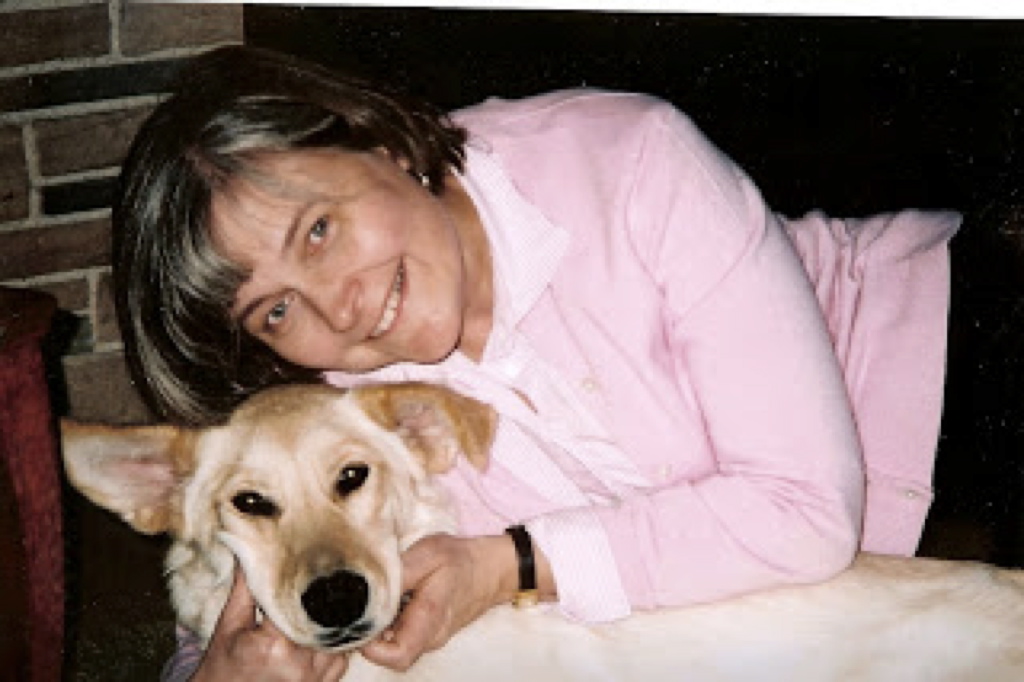
A Letter To Scout, the Dog

We had to put down our 13 1/2 year old golden retriever mix, Scout, yesterday.  I wanted to tell her what she meant to me.  So I wrote this:

Dear Scout,

I met you because of my work.  You were just a tiny puppy.  I was a pastor, visiting a shut in.  You were at Redeemer Residence Nursing Home in South Minneapolis, because a nurse had brought your mom (a golden retriever) and all eight of you puppies to work with her.  You were all in a crate together, and you attracted a LOT of attention.

The shut in and I visited that day, and each of us held a puppy in our hands.  I don't know if you were one of those puppies.  But later on, someone called and said that one of the puppies was available.  Would I like one?  You were 'almost' free.  You had no pedigree.  Golden, Husky, and "something else", was what they said.

Well, I would like one.  I wanted one desperately.  But I had never had a dog before.  I knew you would be a lot of work.  Previously I had been a cat person.  My family had a dog once, so I knew just a little bit about dogs.  Like, dogs are a lot of work.  And, you have to house train them.

I knew you would be a lot of work, but I wanted you.  I wanted something to love.  Truthfully, this was partly because I always wanted children, and I knew I would not have children of my own.  I do have two stepsons that I love with all my heart (and Scout, I know that you did too) but I wanted a baby.  A dog baby.  And yes, I knew you were a puppy and not a human, but I knew also that you would need a lot of care, and I wanted to give you a lot of care.

So we brought you home.  You were just short of 7 weeks old.  We had studied and asked questions but truthfully, we had no idea.  I apologize for that.  You never really liked the crate.  For some dogs it is a comfort, but it never was for you.

I took you home and the first couple of weeks were very hard, taking you out in the middle of the night (both of us surprised when a raccoon jumped out of the garbage can).  There was sleep deprivation and running back and forth from church, and then taking time off so I could stay home to train you.  And then you started getting sick in the middle of the night, and we couldn't find the right food for you, and you started getting possessive of strange things -- growling over a paper towel (for example) or a sock you found on the ground, and scaring us.  I realized that I was in over my head in dog training, and I took you to the Animal Humane Society for testing and advice.  You had been sick the night before and were skinny and I brought a can of bland food for the test.  They did some tests and said you were a "confident puppy".  But then they put a little food in the food bowl and had you start eating and when they put the plastic hand in to take away the food you went ballistic!  They told me you were "aggressive" and that you would need special training but that there were no guarantees that the training would work.  You were about 10 weeks old then.  I took you home and cried all the way.

But we took you to a behavioral veterinarian and we took you to a special trainer who specialized in aggression.  I took you to the dog park almost every day when you were a puppy, to try to deal with some of that excess energy.  We took you to classes in dog obedience.  You never got very good at coming when called, but you really got good at "drop it" and "leave it."  You sat like a pro, but "stay" was hard.  You were not a perfect dog, but you were a good dog.  I know this because of you.

Because of you, I took walks.  I have never been good at regular exercise.  I'm one of those people who likes reading and writing and thinking way too much.  I tried to walk, because I like walking, but until you came along I was never very consistent.  But I took you for walks every single day.  Even when it was dark and cold.  Sometimes, of course, they were shorter walks, but I took walks, and sometimes long walks in the summer.  Because of you I was not afraid to take walks in the dark, because you were with me.  Because of you I took walks because you needed the exercise too.

Because of you, I learned a new language:  dog.  When we went to the behavioral veterinarian, she said, "Scout doesn't know English.  Think of her as if she was a German exchange student."  So I studied, and tried to learn dog.  I learned how to read your bows and your growls and the way you turned your head to the side.  I learned to notice when your tail was up or your tail was down.  and I learned to stand straight and speak low when I wanted you to take me seriously.  I read the book Culture Clash and The Other End of the Leash, and learned to respect your species, and not try to make you into a human.  I still remember the day I learned what it meant when you dropped one of your toys by the kitchen table while we were eating:  you wanted to trade!  (sorry:  you did not get table scraps.)

Because of you, I learned to be less materialistic.  Because sometimes you destroyed things that I loved.  Like (for example) books.  Or a nice pair of shoes.  But I knew you didn't do it on purpose, like some people would.  You just didn't understand the value that humans put on "things".  So I learned to let go of things -- some things -- that I really loved -- because they are just things -- they are not creatures with hearts that beat, and are alive.  (I also learned -- at least most of the time -- to put things where you could not get them).

Because of you, I learned what the word "good" really means.  Because you were a good girl.  You were always a good girl.  Even when you chewed up books, and even when you unwrapped packages, and even when you ate the raisin cookies (and I had to take you to the vet).  Despite all of those things, you were always a good girl.  Even when you growled and snapped as a puppy, and made us afraid, it was because you were trying to tell us something.   You bit me once, and then I knew I had to get really serious about understanding you, and making you understand me, too.  And finally we learned, and you lived for 13 1/2 years, and you were a good girl.   Because you know what, "Good girl, Scout" really means?

It means, "I love you."  No matter what.


Wednesday, November 7, 2018

Ministry of Presence

So last week we had homeless families staying in our church overnight every night.  People come and prepare the dinners every evening.  Some prepare breakfasts.  Some help them with their evening activities.  I was asked to stay overnight with the families one evening.

It's not a hard job.  It does not require any particular skill set, just being willing to sleep on an air mattress.  It's always possible that there will be a middle-of-the-night emergency, but it hasn't happened yet.

So what I do is come over and meet the families, and talk with them, and, at some point, go to sleep on an air mattress in a room nearby.  That's it.

This was a particularly easy week.  There were just two moms and two babies.  One of the babies was teething, and this required a little extra rocking and singing, which is something that I can do, although I claim no special skill at rocking and singing.  I do know this one Swedish song that my grandfather sang to me when I was a little girl.

Then on Saturday morning, I got up and went home.

When I got home, my husband told me "There's more bad news."  It does seem like there has been a lot of bad news lately, but this morning there had been an attack on a synagogue in Pittsburgh.  Tree of Life.  We watched in horror, as the news unfolded.

Later on I went to visit a shut in couple from our congregation.  She had just broken her ankle.  Their daughter was staying with them over the weekend, helping them out.  We all sat down for conversation and communion.  I found out their daughter was active in a small Baptist church with a large children's ministry.  She worked with third graders; some of them came from "tough backgrounds".  I could tell that she loved working with the children and giving them a firm foundation.  They decided that despite their size, they could somehow make an impact on the children in their community.

We had all been watching the news, too, about the synagogue.  We talked about how it was the older people who were there that morning.  How many of our churches are filled with older people?

The daughter asked me about something she had heard on the news.  "They said it was Shabbat," she said.  "What is Shabbat?"

It is the Sabbath, I answered.  It was their Saturday morning worship service.

We read the gospel, prayed together, shared Holy Communion.

All this week, I've been thinking about that widow, the one who gave her last two copper coins.  Like they would do any good, compared with the enormity of the world's tragedy.  Why did she give them?  Other than as a sermon illustration, what good would they do?

And yet it was her whole life.  So small.

You sleep overnight with the homeless families, or you make them a meal.  You visit shut-ins, and you give them just a little piece of bread, an a sip of wine.  You make someone a meal, or you just sit there while someone cries, because, what else can you do? You go to worship, like you always do.  You go for God, and you go for the other people who will be there.  You are present, and you are giving your whole life.

All God asks is for us to be present to Him, which means to be present to one another.  Be there.  Be the widow with her two copper coins.  Or, at least SEE the widow with her two copper coins.

All God asks is our whole life.  No special skills are needed.


Monday, November 5, 2018

Sermon for All saints: The Hope of the Saints

John 11:32-44
Rev. 21:1-6


            “What is heaven like?”  They said it in unison – just as the pastor walked in the door.  
            They were two daughters, and they were standing at their mother’s bedside.  99 years old.  And this was their question.  “What is heaven like?”  
            Well – what would the pastor say?  
            What could the pastor say?  
            To be truthful, there is not much description of heaven in the Bible.  There are a few images in the Revelation of the saints worshipping at the throne of the Lamb, and the one who will wipe away every tear from our lives. 
            There is the apostle Paul, struggling to describe our resurrected bodies, which will be bodies, but imperishable, immortal, changed – in the twinkling of an eye.  
            There is Paul’s conviction that if we hope for this life ONLY, we are most to be pitied.  There is more to life than this life.  
            But about heaven – we do not know much.  So what would the pastor say?  “What is heaven like?”  

            Well, she said, finally, I think heaven is like a great banquet  -- -like those holiday meals that we get together for – when everyone is happy to see each other – and no one is fighting – and there is a place for everyone at the table – and there is enough for everyone, too.  
            And then the sisters remembered the holiday meals in their own family, at Christmas or Thanksgiving or at Easter.   
            They remembered the feasts and the fancy tablecloths, and the care their mother took to welcome everyone home.  
            And they remembered with hope – hope for their mother and hope for themselves.  When someone you love is dying, you need to have something to hope for.  

            And that is part of what All Saints Day is about.  It is about the hope of the saints – our hope.  “What is heaven like?  What do you hope for?”

            In a book by Barbara Kingsolver, “Animal Dreams”, two sisters are separated when one of them decides to go to Nicaragua to live and work.  
            Her sister can’t understand her decision – thinks she’s crazy.  
            In one of her letters home, she tries to explain.  She writes: 
            “The very least you can do in your life is to figure out what you hope for.  And the most you can do is live inside that hope.  
            Not admire it from a distance but live right in it, under its roof.  What I want is so simple I almost can’t say it:  elementary kindness.  Enough to eat, enough to go around…. That’s about it.  
            Right now I’m living inside that hope, running down its hallway and touching the walls on both sides. I can’t tell you how good it feels.” 

             That’s it.  The very least you can do in your life is figure out what you hope for.  
            What do you hope for? 
            Eternal life -- The hope of the saints –– but what does that mean?  “What is heaven like?”  
            And what does it mean to live inside this hope every single day – while we live?

            When I think about the gospel for today – and the hope of Mary and Martha – I first think of Mary’s words, “Lord, if you had been here, my brother would not have died.”  
            Their hope is for their brother’s life – their hope is they not be separated.  
            Their hope is to sit down once more at the table with him, eating and talking and sharing – life. Life.  
            That’s the hope of the saints – is that life – goes on – and that we share it together with those we love.  
            It is the question from the old gospel song, “Will the circle be unbroken?” and the hope that the answer is a resounding “No!”   
            The hope of the saints -- is the hope that  life, not death will have the last word, hope that we will be together – again –to sit at the table and eat and talk and share.  
            The hope of the saints is the hope of the great reunion, where death and crying and pain will be no more and where we will be together – again.

            I can’t help thinking right now about Oscar Romero – who was martyred back in El Salvador in 1980 but who just became a saint.  
            He was murdered while he was saying Mass in a small chapel.  
            He had not been a radical priest by any means.  
            He was quiet and bookish, and he had a deeply traditional faith.    When someone told him that there were two churches – the church of the poor and the church of the rich, he answered, 
            “No, there is only one church, the church which Christ preached, the church which adores the living God.” 
            “Will the circle be unbroken?” 

            But he loved the people, the poor who were hungry, those who were longing to be free.  
            And so he spoke on behalf of them,  spoke up for the violence to stop, spoke on behalf of their hunger.  
            Because the hope of the saints is not just for that great reunion after we die.  
            The hope of the saints is also for a reconciliation of all the things that divide us.  
            It is the vision of the reunion of the living and the dead, the rich and the poor, the privileged and the outcast. 

            What is heaven like?  
             It is a great reunion, where death will be no more.  It is the unbroken circle with those we love. 
             It is the banquet table where there will be enough, where we will sit down and eat and share.   
             It is the unbroken circle with those God loves.  And it is wider than we imagine.  

            Once in awhile we catch a glimpse of it.  

            I remember once long ago – we went up to a concert where someone we loved was playing in a band.  
            We went up to hear him pay even though the event he was playing was somewhat unusual:  a tattoo convention. 
             I remember wandering around the smoke-filled room, hearing the bands, watching people get tattoos, and thinking, “these are not my people.”  
            And then as soon as I had that thought, I saw a display, “Bikers for Jesus.”  and I thought,  “hmmm. Maybe they Are my people.”  

            “What is heaven like?” 
            Close your eyes and imagine the banquet table, the great reunion, that the circle is unbroken.  
            Mary and Martha and their brother Lazarus, Oscar Romero the poor of El Salvador,  bikers for Jesus,  your father, your uncle, your son – people you love, people you don’t know, people you don't love, friends, strangers, all, beloved by God.
            A place for everyone. And there is enough.

            The light shines in the darkness, and the darkness does not overcome it.
            “What is heaven like?”

            Amen 


Thursday, November 1, 2018

Healing the Blind Man (Not Bartimaeus)

Growing up in the church, I always knew that Jesus healed blind people, but the stories sort of ran together.  Then, when I became a serious student of Scripture, they became more distinct.  In John, Jesus healed a man blind from birth, which ignited a firestorm of controversy.  In Matthew, Jesus heals two blind men at the same time.  And then there is Mark.  There is a blind man in Mark who has a name.  His name is Bartimaeus.  That by itself is unusual.  How many of the names do we know, of all the people Jesus healed?  Lazarus?  But for some reason we know that one blind man named Bartimaeus.  And we also know the question Jesus asked him, "What do you want me to do for you?"

It is a question which resonates throughout the ages.

What do you want me to do for you?  He answered, "Rabbi, I want to see."

But there's another blind man in Mark, and I'm not sure how I got through all the years of my childhood and four years of seminary and several years in the parish without ever noticing him.  I read all of the gospels and never really noticed him.  He's a couple of chapters before Bartimaeus and, like most everyone else, we don't know his name.  Just that several people begged Jesus to heal him, and so Jesus did.

Except it was not so simple as that.

The first time Jesus lays his hands on him and heals him, he can see people, but they look like "trees walking."  Everything is fuzzy.  It is like Jesus has done a 'half-miracle.'  He has only sort of healed the man.  I'm used to Jesus doing everything perfectly the first time, so this seems odd.  It's so odd, in fact, that only Mark tells the story.  It's as if Matthew and Luke took a look at it and said, 'nah.  Nobody is going to believe this.'

On the other hand, how many times have you experienced an instantaneous and miraculous healing?  I have heard of them, but, truth be told, I have never experienced one.  Gradual healing is much more in my experience.  I take the medicine and I start to feel better, but I'm not all the way healed.  I have to keep taking it.

I love the story of the blind man Jesus healed, the one who was not Bartimaeus.  I imagine myself not in Bartimaeus who was totally healed, but in the nameless man who knows he was touched by Jesus, but still has a way to go.

I'd love to have the total clarity of Bartimaeus.  This is true of both my ministry and my life.  I'm leading my congregation and I think I know the path ahead but it turns out that I'm a little nearsighted, and some of the details are fuzzy.  Which means that I have to ask Jesus for sight -- again.  According to Mark, chapter 8, that is all right.  I can come to Jesus, again and again.  I have to keep taking the medicine.

Gospel medicine.

When I wonder just what the gospel medicine is, I can't help noticing what happens between Mark chapter 8 and Mark chapter 10.  Jesus predicts his death and resurrection.  Three times.  What becomes clearer is the necessity of suffering.  It is the cross which provides he medicine.

"What do you want me to do for you?"  It's such a simple question, but sometimes, I have to admit, I'd rather see trees walking than the sharp reality of the cross.  Perhaps that's why the healing is more often gradual.  Maybe it's easier to bear that way.